Eye pressure monitoring contact lens
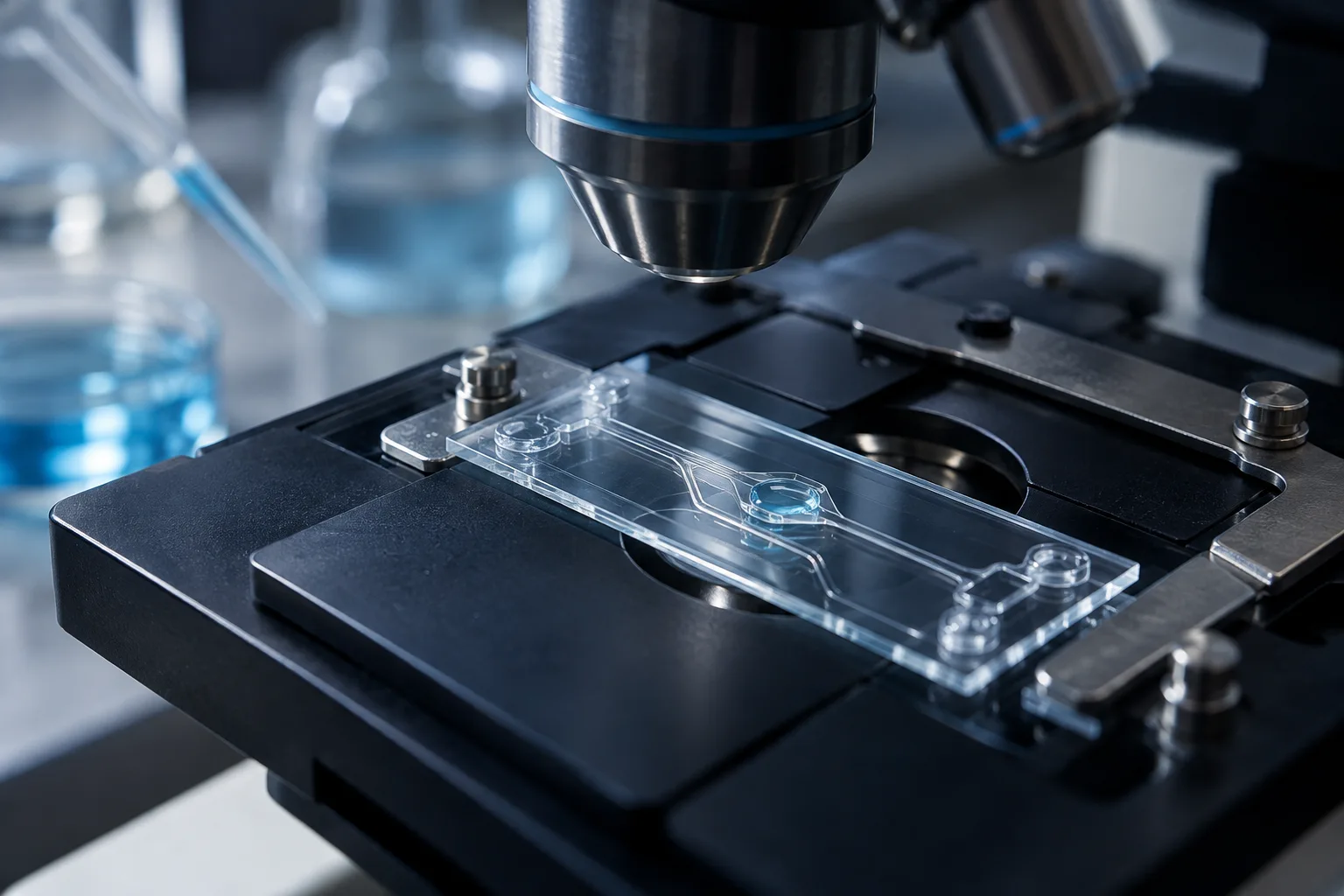
This is an idea, not a product. Nothing here has been built or tested unless a linked technology profile says so.
The problem
People with glaucoma may want to know how their eye pressure changes across the day and night, not only at scheduled clinic visits. A sensing lens may help clinicians choose better times for measurements, but it cannot yet give an absolute pressure reading.
The idea
A first version would be a soft sensing lens of the Triggerfish type, which detects small changes in eye volume over a day and reports them as a relative trend rather than a pressure in mmHg. It would be offered only as a clinician aid for timing eye pressure checks in adults aged 22 and over who are already under glaucoma care, with no treatment decision made from the trend alone. Any move towards absolute readings would need a separate calibration study against an accepted reference.
Enabling technology
- Smart contact lenses: Smart contact lenses are soft lenses with sensors or micro-displays built in. One sensing lens, Sensimed's Triggerfish, has US marketing authorisation to help clinicians time eye pressure checks in glaucoma, but tear glucose sensing and display lenses have only been tested in small early studies and in animals.
What stands in the way
- The only sensing lens with US marketing authorisation reports output in arbitrary units. The link between that output and eye pressure is an assumption, and changes in corneal shape and thickness may also affect the signal.
- Agreement between days is only fair. In the 2012 Triggerfish trial, readings from two 24-hour sessions a week apart had a correlation of r = 0.59 overall and r = 0.40 for daytime periods only.
- Opaque antennas and chips may block vision and reduce oxygen permeability. Practical problems reported in the review include possible eye heating from electric current and irritation from hydrogen peroxide.
- Human studies are small and short, with 40 people in the main Triggerfish safety trial and no multi-person trial of a display lens.
- Two major smart lens programmes stopped in 2018 and 2023, so funding and industry support for this category are uncertain.
A cheap way to test it
Bench test with no human subjects. Build a sealed artificial eye chamber with a flexible membrane, fill it with saline, and connect it to a pressure controller, with a calibrated manometer as the reference. Mount a sensing lens or lens-format sensing prototype over the membrane. Step the chamber through a range of pressures chosen before testing to cover the span relevant to glaucoma care, hold each step for a fixed time, and record the sensor output alongside the reference reading. Repeat the sweep with an artificial tear solution on the surface, and again after a fixed number of pressure cycles set before testing. Pass only if all three conditions hold: the sensor output moves in the same direction as the reference at every step; repeat sweeps of the same lens agree with each other at a Pearson correlation of at least r = 0.59. That figure is the overall day-to-day reproducibility reported for Triggerfish in people, as set out in the linked profile. It comes from a different setting, so it is a provisional threshold to be confirmed or replaced before testing starts; and the lens surface temperature stays below a limit set before testing. Fail if any condition is not met. A pass would justify a first clinician-facing study on trend data only, not a claim of accurate pressure readings.