Solar-regenerated water cartridge for remote homes
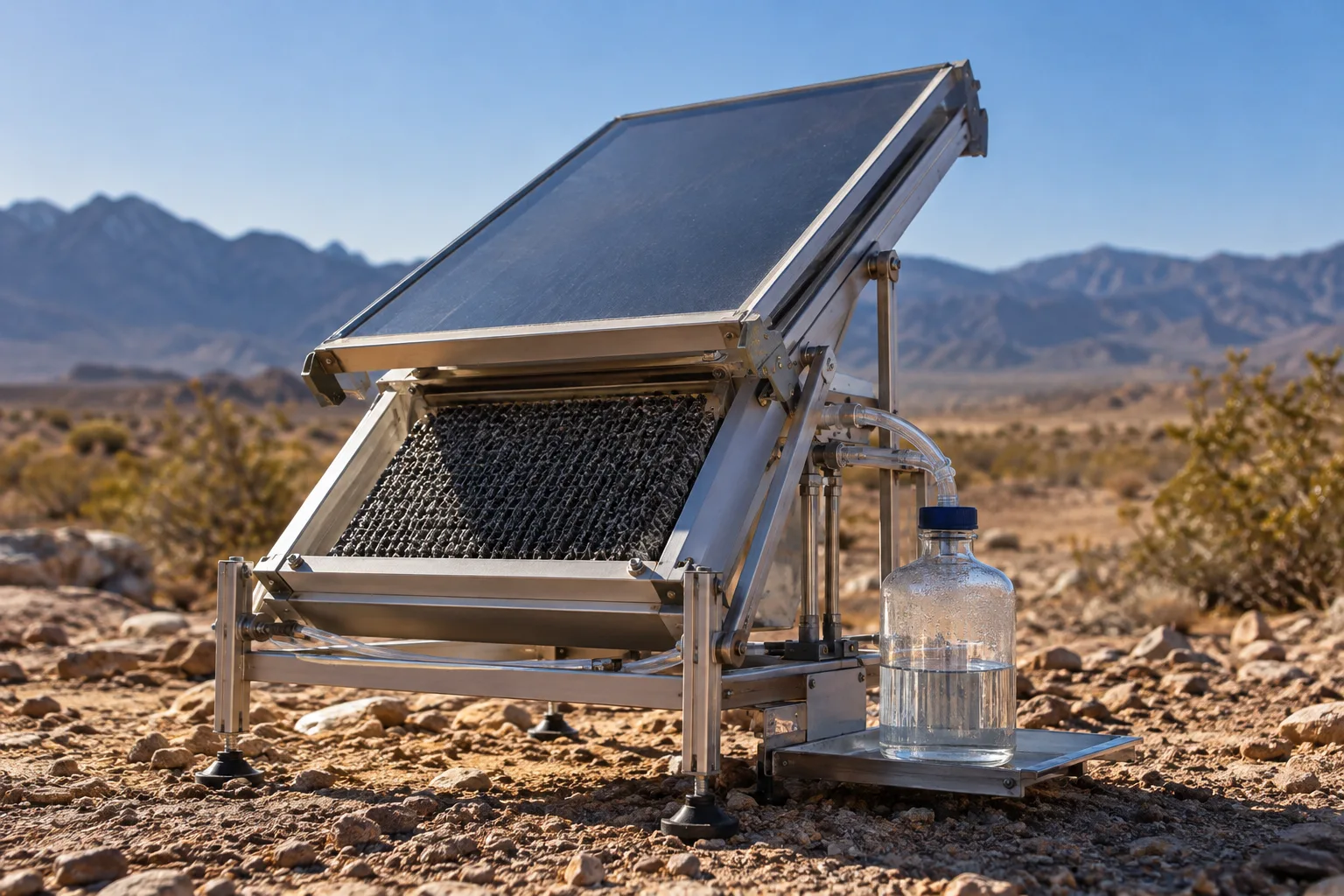
This is an idea, not a product. Nothing here has been built or tested unless a linked technology profile says so.
The problem
Remote households and field teams may need small amounts of backup water where delivery is unreliable, but carrying or storing all water can be difficult.
The idea
A reusable cartridge would contain a water-adsorbing sorbent. It would collect water vapour from air during a cooler or more humid period, then use sunlight or low-grade heat to release vapour into a condenser. The concept is for supplemental water in suitable climates, not a general replacement for a reliable water supply.
Enabling technology
- Atmospheric water harvesting (MOF/sorbent based): Sorbent-based atmospheric water harvesting captures water vapour in porous materials such as metal-organic frameworks, then releases it for collection as liquid water. Prototypes have operated in desert conditions, including at very low humidity, but measured output depends on sorbent mass, climate and device design. A key bottleneck is moving released vapour to a condenser cool enough to collect it.
What stands in the way
- Water output per amount of sorbent is limited and depends on local humidity, temperature, sunlight and the number of daily cycles.
- The design needs effective heat transfer and condensation while preventing collected water from contacting contaminants.
- The sorbent, seals and condenser need long service life, and the complete cartridge needs a safe cleaning and water-quality process.
- Water collection in one climate or laboratory setup does not establish useful output in other locations or seasons.
A cheap way to test it
Weigh a small sample of a candidate sorbent before and after leaving it in a sealed container with a humidity meter and a small water reservoir. Warm the loaded sample with a low-power lamp inside a simple sealed condenser, collect and weigh the condensate, and repeat at two humidity levels. Do not drink the collected water; this experiment measures uptake and release only.