Long-term cryonics storage: custody, records and continuity
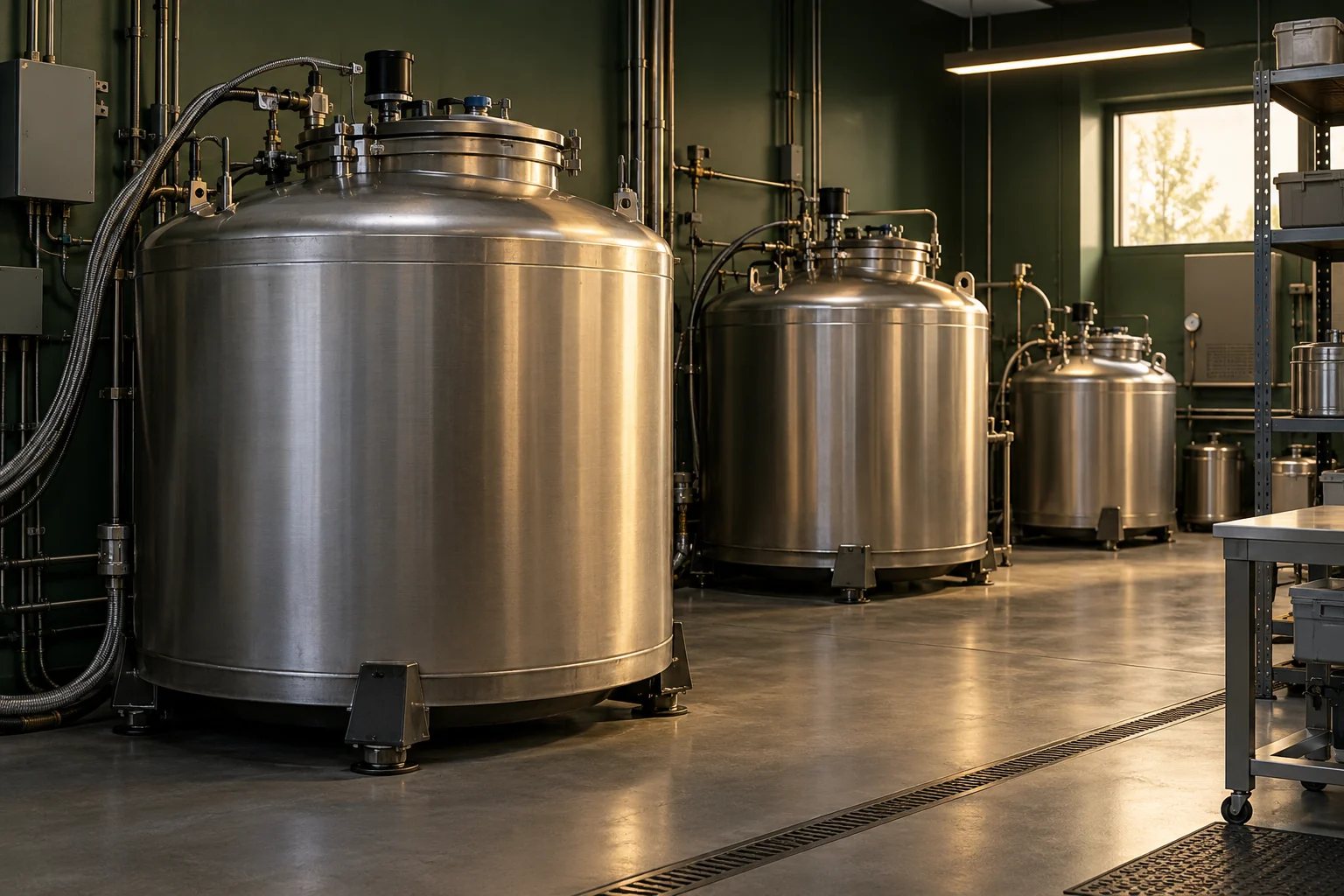
Cryonics proposes preserving a person after legal death in the hope of future recovery. That hope depends on more than the initial preservation: the specimen would also need to remain identifiable and in storage, with enough records to understand its history, for an unknown period. A provider's stated intention to maintain a service describes an undertaking; it cannot guarantee that future organisations, resources or recovery technology will exist.
This is a general continuity framework, not an audit or estimate of disruption likelihood. Alcor and the Cryonics Institute describe their services and future expectations in their own FAQs (Alcor; Cryonics Institute). These pages are evidence of what the organisations say, not independent evidence that recovery is possible.
What continuity involves
Identity and records need to link the person, preserved material and its history. A reader can ask how records are retained, corrected, transferred and linked to later custody, and how private information is protected. Missing entries may make a history harder to interpret, even if the specimen remains present.
Funding, staff, facilities and responsibility also matter. What do the documents say about resources intended to support storage? Who oversees them, and how is responsibility expected to pass on if people or organisations change? A plan or contract can make present duties and intentions clear. It cannot ensure that a future institution will have the means, authority or willingness to carry them out.
A hypothetical continuity example
Imagine that responsibility for a specimen passes to a new custodian. A reviewer could ask whether the handover record links the specimen's identity to its history, states who accepted responsibility and shows where associated records went. These documents might support a traceable account, depending on their completeness and reliability. They would not prove that every event was recorded, that biological organisation survived, or that future recovery could work. A gap in the file limits what can be established from that file; on its own, it does not prove what happened biologically.
This is why storage history and recoverability are different questions. The preservation-report guide explains how to separate intended procedures, recorded observations and conclusions about a specimen. The cryonics profile explains the broader evidence gap: no human revival has been demonstrated.
Questions for a specific arrangement
- How are identity, preservation history and subsequent custody linked in records?
- Who holds responsibility for the specimen, records and supporting resources?
- What do the documents say about changes of staff, facilities or custodian?
- Which statements are commitments, descriptions of current arrangements or expectations about the future?
Answers require the actual documents and appropriate expertise. This framework is not a legal review or operational audit. The provider FAQ citations retain the profile's 22 October 2026 source-review scope; this article was adapted and independently edited on 27 October. No fresh verification of operations or contracts is claimed. Its example is hypothetical analysis, not a reported incident or verified plan.
Related reading
Technology profiles
Making sense of biotechnology and synthetic biology
Begin by identifying what is being engineered: a molecule, a cell, a microbial culture or a larger biological system. Then follow the evidence from the experiment to its proposed use. Keep the test setting visible throughout that journey. A result in a controlled culture, an animal study and a human application each answers a different question, with different limits on what can be concluded.
What to check in this field
Questions to take to the evidence
- What biological system was studied, with which controls and endpoints? Check whether the claimed benefit was directly measured or inferred from a related marker.
- Can the process be repeated across batches? Ask about contamination control, stability, separation of the final product and the inputs needed to make it.
- What oversight would the intended use require? Look for the stated containment, environmental assessment or clinical pathway, and keep unresolved requirements visible.
What would make the future useful?
Biological engineering could support new ways to make useful substances or study disease. Assess each proposed use through its own performance, containment and validation requirements; do not assume that success in one organism or application transfers to another.
Explore the field: Precision fermentation · Base and prime gene editing.
Sources
Checked against its sources by Independent AI review and concise edit; adapted from the cryonics source review of 22 October 2026.