Experimental cross-disciplinary systems
Work that does not fit neatly in one field.
Technology profiles
Acoustic levitation
Acoustic levitation uses arrays of ultrasonic emitters to form standing waves that hold and move small particles and droplets in air without touching them. Laboratory experiments have shown contact-free, three-dimensional movement of millimetre-scale objects, but the working volumes and payloads are small.
AI tutors
AI tutors are chatbots built on large language models that help students learn through explanation, practice questions and feedback. Randomised trials report mixed results: some find gains, while others find no benefit or lower performance when students can simply ask for answers.
AI weather forecasting
Machine-learning weather models such as GraphCast, GenCast and ECMWF's AIFS produce global forecasts in minutes. In published and operational tests they match or beat leading physics-based systems on many headline measures, but they still struggle with small-scale detail, the early growth of forecast error and physical consistency.
Analogue quantum simulation
Analogue quantum simulators are programmable devices, built from cold atoms, Rydberg atom arrays or trapped ions, that are tuned to behave like a chosen quantum model so that researchers can study its physics. Published experiments reach up to 256 atoms or ions and reproduce known phases of matter, while claims of practical advantage over classical computers are early and hard to verify.
Atmospheric water generators
Atmospheric water generators are compact machines that turn moisture in the air into drinking water, usually by chilling the air below its dew point. Energy use per litre rises in dry or cold conditions, and the performance figures checked for this profile come from a small number of studies.
Digital twins of the Earth
Digital twins of the Earth are high-resolution, regularly updated simulations of the climate and weather system, built to test 'what if' scenarios and support planning. The EU's Destination Earth Climate Change Adaptation Digital Twin runs global simulations at about 5 to 10 km, and NVIDIA's Earth-2 platform adds AI emulators whose speed and energy claims come from the company and have no published benchmark.
Direct-to-phone satellite messaging
Some phones can now send texts and emergency messages straight to satellites when no mobile tower is in range. Emergency texting on iPhone has been in use since 2022, while broadband-style data to ordinary phones is still at an early stage and rests largely on company-reported figures.
DNA data storage
DNA data storage encodes digital files in synthetic DNA sequences, then reads them with sequencing. DNA is extremely dense and can remain stable for long periods when stored well, but writing and reading remain slower and more expensive than electronic storage. In 2026, researchers reported advances in composite-letter coding and a codec tested in vitro and in living cells. These studies address parts of the system, not the cost and throughput of a complete archival service.
DNA nanotechnology and DNA origami
DNA nanotechnology uses the way DNA strands pair up to build tiny shapes and devices. DNA origami folds one long DNA strand into a chosen shape with the help of many short 'staple' strands, and researchers have used the method to make nanoscale patterns and three-dimensional objects.
Electric aircraft
Electric aircraft drive their propellers or fans with electric motors, powered either by batteries alone or by batteries combined with a fuel-burning engine. A two-seat electric trainer is type-certified, and larger hybrid-electric demonstrators have flown, but the sources reviewed here show no airline service on regional or longer routes.
Hoverboards
A complete guide to wheeled hoverboards, magnetic levitation and flying platforms: what has been demonstrated, what each approach requires, and what remains speculative.
Jet suits and jetpacks
Jet suits and jetpacks are wearable frames that carry small jet engines, letting a trained person fly for a few minutes. Trials by an air ambulance service and a navy show the idea can work, but short flight times, high cost, noise and unsettled rules keep use niche.
Laser-written glass data storage
Laser-written glass data storage encodes information as tiny marks inside blocks of glass using femtosecond lasers. Microsoft's 2026 Nature paper reports a system that could hold about 4.8 TB on a 120 mm square glass plate, but the lifetime claims of more than 10,000 years rest on accelerated tests and extrapolation, and no commercial product has been announced.
Low-boom supersonic aircraft
Low-boom supersonic aircraft aim to fly faster than sound while making the sonic boom heard on the ground much quieter. NASA's X-59 research aircraft has flown supersonically, but no passenger aircraft has yet shown quiet overland flight, certification or airline economics.
Magnetic levitation
Magnetic levitation uses magnetic forces to support an object without contact. Maglev trains and laboratory demonstrations show that it works, but stable support usually depends on a purpose-built track or supporting structure, so it is not the same as a free-floating board.
Post-quantum cryptography
Post-quantum cryptography is a set of new encryption and signature methods designed to stay secure if large quantum computers are built. NIST finalised its first three standards in August 2024, and governments such as the UK have set migration targets running to 2035.
Quantum annealing
Quantum annealing uses special-purpose quantum hardware, such as D-Wave's annealers, to search for low-energy answers to optimisation and simulation problems. Whether these machines beat the best classical methods is still disputed: early tests found no clear speed-up, and a 2025 claim of beyond-classical simulation has been challenged by classical researchers.
Quantum random number generators
Quantum random number generators (QRNGs) turn measurements of quantum processes into random bits, and at least one smartphone has carried a chip-scale version. Whether this adds security over well-engineered classical sources is an open question, and the sources reviewed here give no public throughput figures for consumer chips.
Satellite broadband constellations
Large groups of satellites in low Earth orbit now provide home and business internet, with SpaceX's Starlink the best-documented service. Regulators have approved far more satellites than are in orbit, and astronomers and debris specialists warn about sky brightness and orbital crowding.
The wheel and axle
The wheel and axle lets loads roll over land instead of being dragged. The earliest wheels and wheeled vehicles are known from a few wooden wheels, pictures on pottery and tomb finds dated to the late fourth millennium BC and later, and the interpretation of that early evidence is still debated.
Wireless charging roads
Dynamic wireless charging uses coils built into a road to send electricity by magnetic induction to a compatible vehicle while it moves. Short public and test-track pilots report that the energy transfer can work, but efficiency, cost and durability over years have not been shown independently.
How far away are we?
A full digital twin of the Earth
Pilots · 2 of 8 steps done
AI agents doing everyday computer work
Pilots · 2 of 8 steps done
AI that makes its own scientific discoveries
Science demonstrated · 4 of 6 steps done
An AI tutor for every student
Pilots · 2 of 6 steps done
An internet protected against quantum attacks
Scaling up · 3 of 8 steps done
Battery-electric passenger flights
Engineering prototypes · 5 of 8 steps done
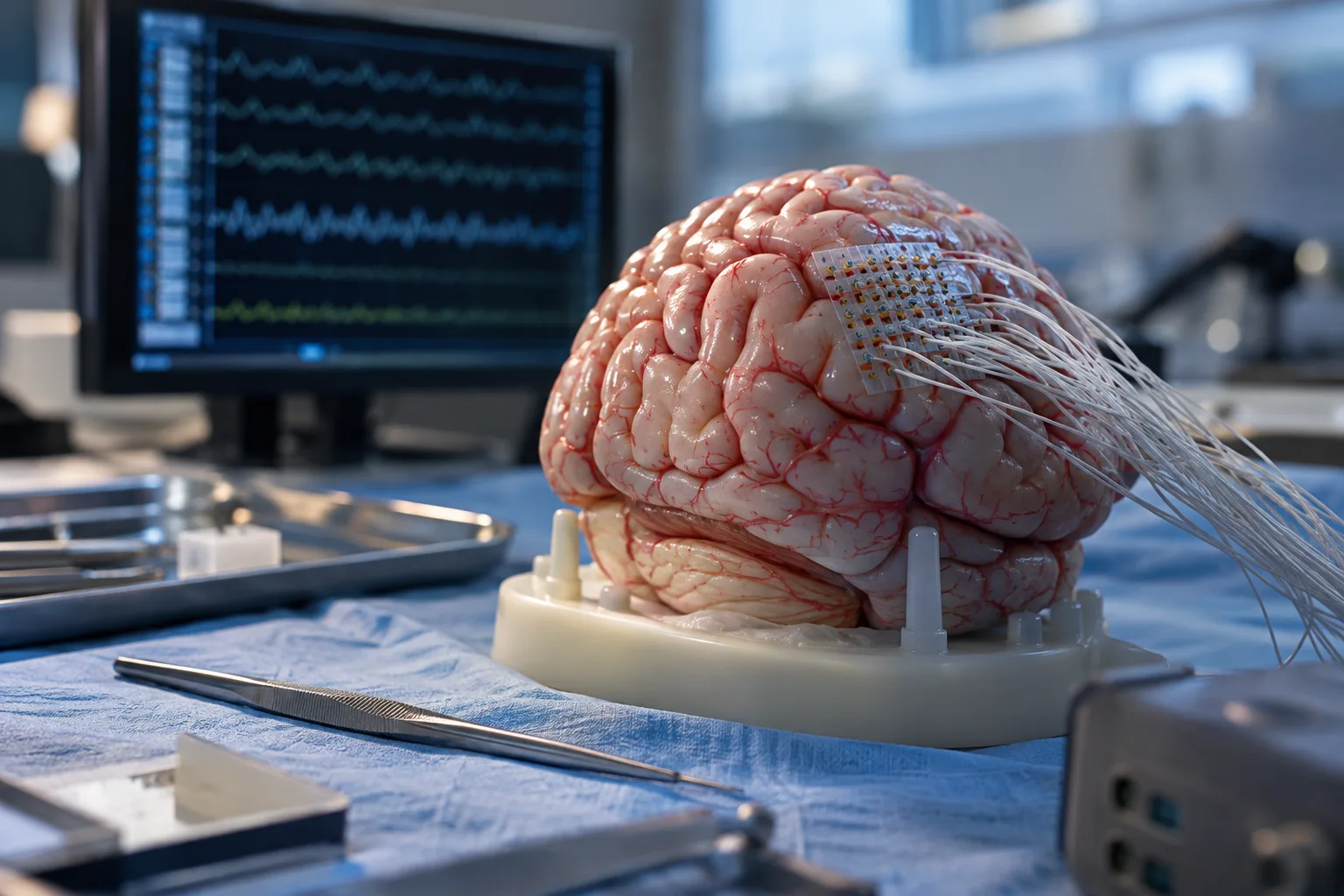
Brain data protected by law
Pilots · 5 of 9 steps done
Bridge sensors that flag possible damage
Pilots · 3 of 5 steps done
Floating cities
Science demonstrated · 3 of 8 steps done
Flying to work in a jet suit
Engineering prototypes · 3 of 7 steps done
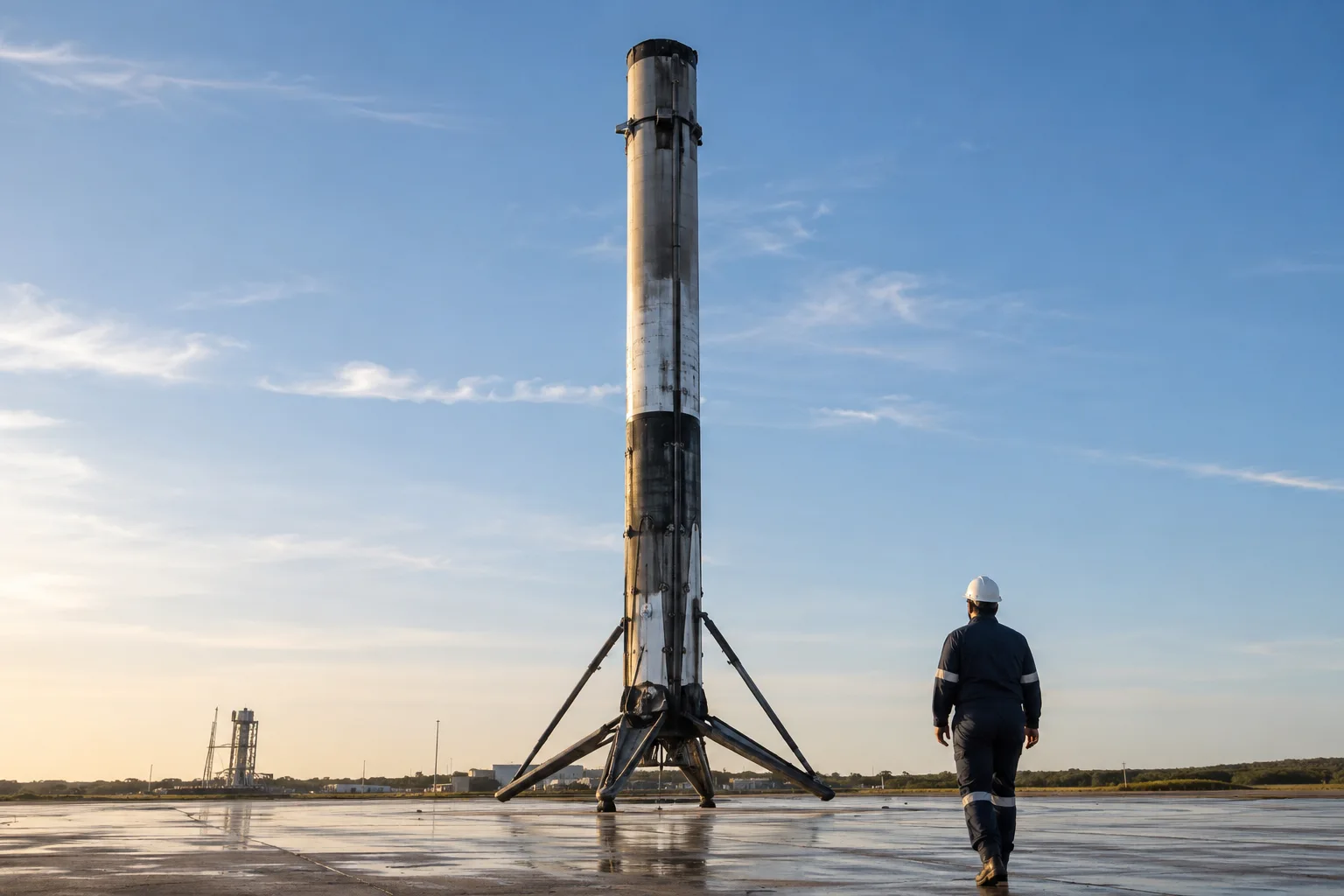
Hypersonic passenger flights
Science demonstrated · 4 of 7 steps done
Medicines and machines built from folded DNA
Engineering prototypes · 4 of 7 steps done
Moving objects with sound
Engineering prototypes · 6 of 10 steps done
Quantum computers solving useful chemistry problems
Science demonstrated · 3 of 7 steps done
Quantum machines beating supercomputers on real problems
Science demonstrated · 5 of 7 steps done
Real hoverboards
Engineering prototypes · 3 of 8 steps done
Reviving people frozen after death
Science unproven · 4 of 9 steps done
Roads that charge cars as they drive
Pilots · 4 of 8 steps done
Space holidays for ordinary people
Pilots · 2 of 6 steps done
Storing the world's archives in DNA
Engineering prototypes · 4 of 7 steps done
Supersonic passenger flights returning
Engineering prototypes · 2 of 8 steps done
Terraforming Mars
Science unproven · 4 of 13 steps done
Time travel
Science demonstrated · 4 of 8 steps done
Travelling by hyperloop
Engineering prototypes · 2 of 7 steps done
Travelling faster than light
Science unproven · 4 of 6 steps done
Breakthroughs
Modified Pearl 15 jet engine runs on 100% hydrogen through simulated flight cycle
The UK Civil Aviation Authority reported on 20 July 2026, in findings from its Hydrogen Challenge, that Rolls-Royce, working with easyJet, modified a Pearl 15 engine to run on 100% hydrogen up to take-off thrust, and across a fully simulated flight cycle. The release says valuable safety and performance data were collected. It gives no thrust values, test durations, temperatures or performance figures. The test was a simulation of the flight stages, not a flight of an aircraft.
Destination Earth climate digital twin runs global simulations at 5 to 10 km
A Geoscientific Model Development paper published on 14 April 2026 describes the Destination Earth Climate Change Adaptation Digital Twin. Its abstract gives spatial resolutions of 5 to 10 km and hourly outputs, but no cost or throughput figures. The body text reports a current throughput of about 0.5 simulated years per wall-clock day at 5 km, with around 200 computing nodes for the 5 km runs and around 100 for the 10 km runs. It also says a 20-year 5 km ICON simulation typically needs about 0.6 million GPU hours. The simulations run on the LUMI and MareNostrum 5 supercomputers. Atmosphere and land output is hourly, and ocean and sea-ice output is daily.

Fine-tuned RFdiffusion designs antibody fragments that bind chosen epitopes
A fine-tuned RFdiffusion network, paired with yeast display screening, generated VHH antibody fragments and single-chain variable fragments (scFvs) designed to bind user-specified epitopes, according to a bioRxiv preprint. VHHs were characterised against four disease-relevant epitopes. Cryo-electron microscopy confirmed the designed binding poses for VHHs against influenza haemagglutinin and Clostridium difficile toxin B (TcdB), and a high-resolution structure of the influenza-binding VHH matched the designed complementarity-determining regions. Initial designs showed modest affinity, and the abstract gives no dissociation constants. Affinity maturation with OrthoRep produced single-digit nanomolar binders that kept epitope selectivity. Designed scFvs against TcdB and a PHOX2B peptide-MHC complex were also reported, with cryo-EM confirming binding poses for two TcdB scFvs.
Microfluidic platform encodes 2,304 bits into DNA in four hours on benchtop
In a proof-of-concept study, binary data was written into DNA by overlap-extension PCR and programmable microfluidic partitioning. The authors report 2,304 bits encoded within 4 hours on a benchtop instrument, using an integrated microfluidic circuit with a 48 x 48 array. Sequencing confirmed the encoding, and the body text reports 100% accuracy at a threshold of 50 reads. A microfluidic qPCR platform decoded the data, with a write-to-read latency of about 8 hours, which the authors compare with about 5 days for conventional methods. The qPCR read of the 2,304-bit image had an error rate of about 0.9%, all of them 1-to-0 errors.
ECMWF puts AIFS machine-learning forecast model into operational use alongside physics model
On 25 February 2025 ECMWF began running its machine-learning model AIFS in operations, side by side with its physics-based Integrated Forecasting System (IFS). ECMWF reports that AIFS outperforms state-of-the-art physics-based models on many measures, including tropical cyclone tracks, with gains of up to 20%, and uses approximately 1,000 times less energy to make a forecast. The announcement does not name the baseline, the measure behind the 20% figure, or the verification period, and it gives no figure for speed.
Data written to DNA by printing epigenetic methylation marks instead of synthesising sequences
Using a set of 700 premade DNA 'movable types' and 5 universal templates, the team used self-assembly-guided enzymatic methylation to write about 275,000 bits without de novo DNA synthesis, at 350 bits per reaction on an automated platform. Data were read back by nanopore sequencing, with algorithms resolving 240 modification patterns per sequencing reaction.
NIST publishes first three final post-quantum encryption and signature standards
On 13 August 2024 NIST published three final standards. FIPS 203 (ML-KEM, derived from CRYSTALS-Kyber) is the main standard for general encryption and key establishment. FIPS 204 (ML-DSA, derived from CRYSTALS-Dilithium) is the main standard for digital signatures. FIPS 205 (SLH-DSA, derived from SPHINCS+) is a stateless hash-based signature standard that NIST describes as a backup to FIPS 204, based on a different mathematical approach. The announcement does not report measured performance or deployment results.

DeepMind's AlphaProof and AlphaGeometry 2 score 28 of 42 at 2024 IMO
At the 2024 International Mathematical Olympiad, a combined system of AlphaProof and AlphaGeometry 2 scored 28 points out of 42, which the operator described as the top end of silver-medal level. The gold threshold was 29 points. AlphaProof solved three of the five non-geometry problems, including the hardest problem in the competition, which the post says only five human contestants solved. AlphaGeometry 2 solved the geometry problem. The two combinatorics problems remained unsolved. The problems were manually translated by people into the Lean formal language before the systems worked on them. The post says one problem was solved within minutes and others took up to three days. Human experts scored the solutions under IMO point rules.