How far away are wearable ultrasound patches from routine clinical use?
Thin patches that stick to the skin and image blood vessels and organs have moved from lab demonstrations into small studies in people. MIT and UC San Diego groups have reported continuous imaging for up to 48 hours and up to 24 hours, a 2024 brain blood flow study in 36 healthy volunteers, and a 62-pregnancy study published in May 2026. The sources reviewed show that current designs are still connected to external equipment, that no patient trial has been reported, and that no regulatory clearance was found.
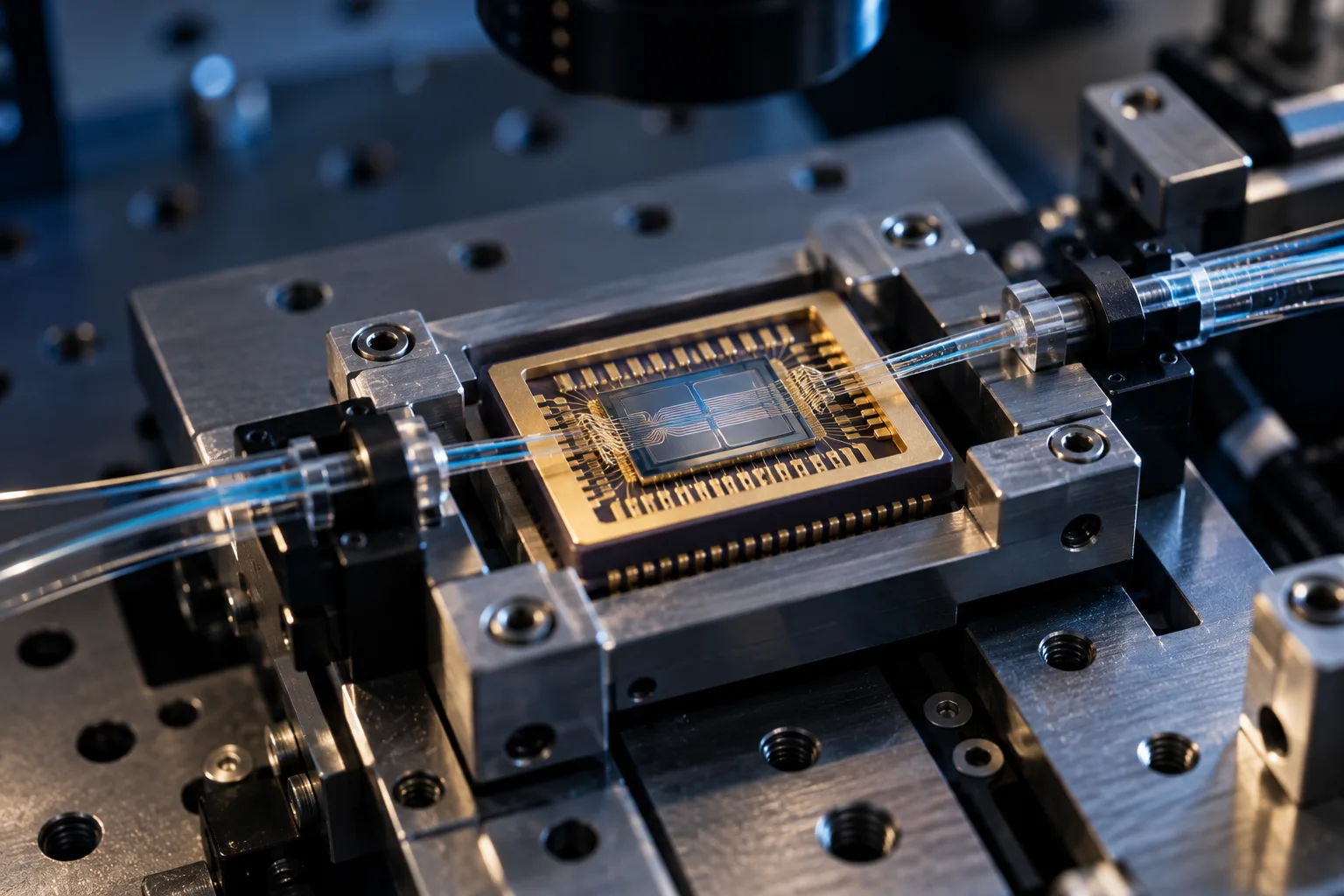
Getting closer. Prototypes exist, but not in real-world use.
Working prototypes have been tested in people, including healthy volunteers and a 62-pregnancy study, and the results were published in peer-reviewed journals. The designs remain tethered to computers or instruments, no patient trial is reported in the sources reviewed, and no regulated product was found. That fits an engineering prototype with human research data, rather than a pilot in clinical use.
The tech tree
Everything recorded on Vrulum that this future needs, oldest foundations at the top and the goal at the bottom. Lines show what each step requires.
- 2022Continuous imaging of blood vessels and organs in healthy volunteersDone Unlocked.
- 2023Wearable cardiac imaging for up to 24 hours, including during exerciseDone Unlocked.
- 2024Brain blood flow monitoring in 36 healthy volunteersDone Unlocked.
- 2026Fetal monitoring across 62 pregnanciesDone Unlocked.
- Date not recordedWireless operationIn progress Being researched.
- Date not recordedTesting in patientsNot started Locked.
- Date not recordedRegulatory clearance for clinical useNot started Locked.
- GoalUltrasound scanners you wear like a plasterGoalRequires: Wearable ultrasound patches, Continuous imaging of blood vessels and organs in healthy volunteers, Wearable cardiac imaging for up to 24 hours, including during exercise, Brain blood flow monitoring in 36 healthy volunteers, Fetal monitoring across 62 pregnancies, Wireless operation, Testing in patients, Regulatory clearance for clinical use. Locked.
The road so far
4 of 7 steps done, 1 in progress.
- Done · 27 Jul 2022Continuous imaging of blood vessels and organs in healthy volunteers
MIT and Mayo Clinic researchers reported stick-on ultrasound 'stickers' that gave continuous imaging of major blood vessels and organs, including the heart, lungs and stomach, for up to 48 hours. The MIT press release gives no volunteer numbers. [4]
- Done · 25 Jan 2023Wearable cardiac imaging for up to 24 hours, including during exercise
A 2023 Nature paper described a patch about the size of a postage stamp that can be worn for up to 24 hours and works during strenuous exercise. The current prototype is connected by cables to a computer. The release gives no numerical accuracy figures. [1][2]
- Done · 22 May 2024Brain blood flow monitoring in 36 healthy volunteers
A 2024 Nature paper reported a conformal patch for transcranial volumetric imaging and continuous cerebral blood flow monitoring. The release says its measurements 'closely matched' those of a conventional ultrasound probe in 36 healthy volunteers. The patch connects by cable to a power source and a computer. [3]
- Done · 26 May 2026Fetal monitoring across 62 pregnancies
A Nature Biotechnology paper, reported by UC San Diego on 26 May 2026, describes fetal monitoring across 62 pregnancies, including pregnancies with gestational diabetes, pre-eclampsia, high blood pressure and abnormal fetal growth. Monitoring ran for hours at a time. The release says the measurements 'closely matched' those from standard handheld ultrasound devices. In one case, the patch detected prolonged abnormal fetal signals that led to an early Cesarean delivery, which researchers say may have helped save the baby's life. [5]
- In progressWireless operation
The teams say wireless versions are in development. The 2026 release says integrating the patch into a compact electronic system 'could eventually allow the patch to operate wirelessly'. The cardiac and brain patches are still cable-connected, and the MIT stickers still need instruments to turn reflected sound into images. The sources reviewed do not report a wireless device tested in people. [1][5][4]
- Not startedTesting in patients
The 2024 release says the team plans to work with UC San Diego School of Medicine clinicians to test the patch on patients with neurological conditions that affect cerebral blood flow. No patient results are reported in the sources reviewed. [3]
- Not startedRegulatory clearance for clinical use
No FDA clearance, CE mark or other regulatory approval was found for these patches in the sources reviewed. The cardiac team plans to commercialise the technology through Softsonics, a UC San Diego spin-off co-founded by Xu and Shu Xiang. The release gives no regulatory timeline. [1]
Why it matters
A standard ultrasound scan needs a bulky machine and a trained operator, so it happens at set times. A patch that works for hours could show changes as they happen, in hospital, during exercise or at home. Whether it is useful depends on accuracy, comfort and whether a non-specialist can use it, and none of these is yet shown at scale.
What stands in the way
- Current designs need cables to a computer or instruments. Wireless versions are described as work in progress, and none is reported tested in people.
- Human results so far come from healthy volunteers and a research cohort. Testing in patients with neurological conditions is described as a next step.
- No regulatory clearance was found in the sources reviewed, and the route to clinical approval is not described.
- Long-term skin comfort and safety are not reported. The longest wear times cited are 24 hours (cardiac, 2023) and 48 hours (MIT, 2022).
- The cardiac imager's accuracy has not been measured against clinical echocardiography in the sources reviewed, so its diagnostic value is not yet established.
Signals to watch
- A wireless version of a cardiac, fetal or brain patch, tested in people and reported in a peer-reviewed paper.
- A registered or published clinical study in patients, such as patients with neurological conditions, as described in the 2024 UC San Diego release.
- A regulatory clearance for any of these patches, checked against FDA and other regulator databases.
- Published accuracy figures for the cardiac imager against clinical echocardiography.
- Wear studies longer than 48 hours that report skin safety and comfort.
Sources
- university press release
Cardiac imaging on the go
UC San Diego Today, 25 Jan 2023. - peer reviewed paper
A wearable cardiac ultrasound imager
Nature, 25 Jan 2023. - university press release
Wearable ultrasound patch enables continuous non-invasive monitoring of cerebral blood flow
UC San Diego Today, 22 May 2024. - university press release
MIT engineers develop stickers that can see inside the body
Jennifer Chu. MIT News Office (MIT Department of Mechanical Engineering), 27 Jul 2022. - university press release
Wearable ultrasound patch could improve care for high risk pregnancies
UC San Diego Today, 26 May 2026.
Last reviewed 21 Oct 2026.