Biodegradable wildlife tag
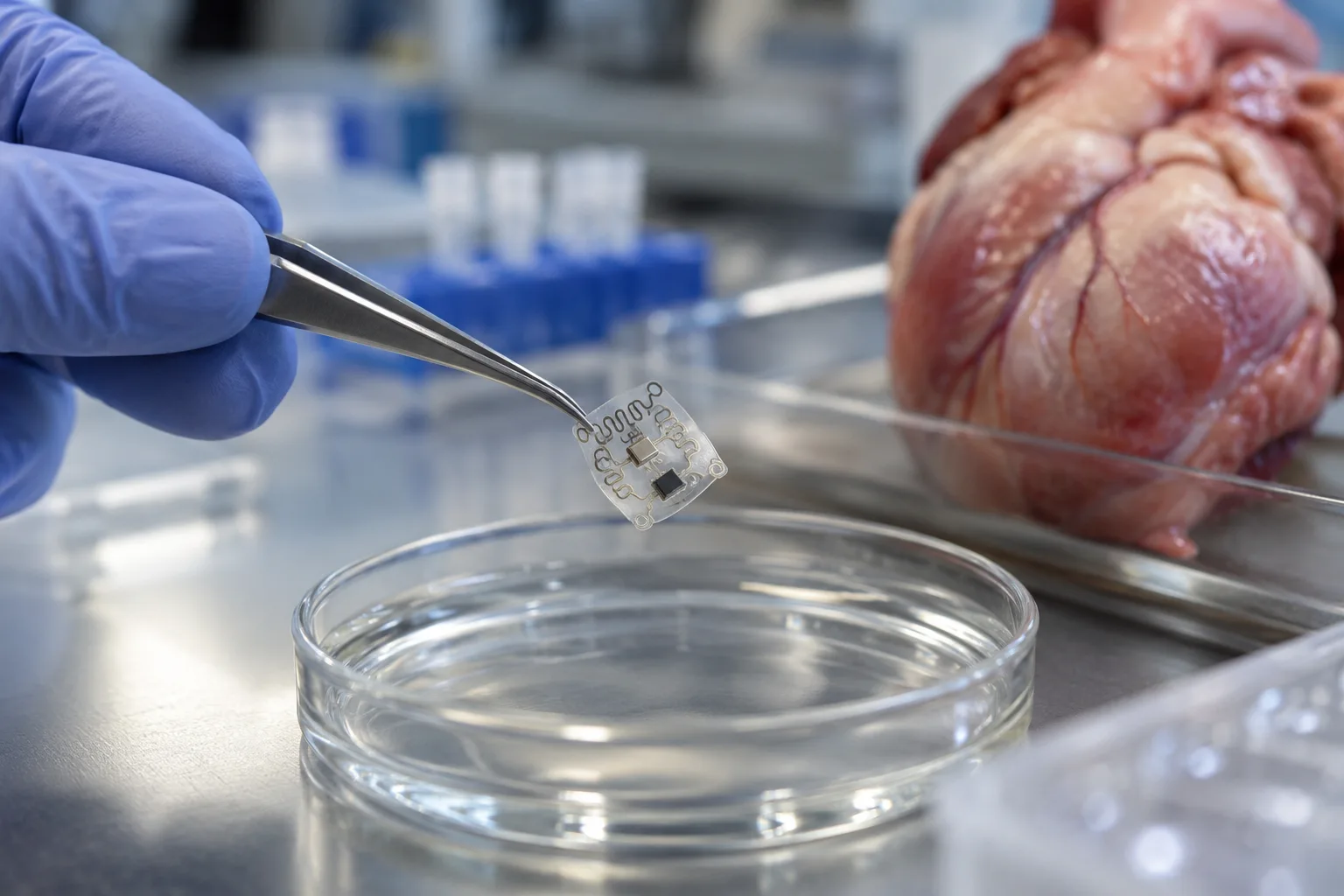
This is an idea, not a product. Nothing here has been built or tested unless a linked technology profile says so.
The problem
Wildlife researchers may want a temporary device whose electronic part stops conducting after a study period, so that less electronic material remains in the animal or the habitat.
The idea
An early research step would be a single printed zinc trace, made by flash-sintering zinc microparticles, and sealed in a biodegradable encapsulation layer such as PLA or silk. The encapsulation thickness would set how long the trace stays conductive. The profile reports that a 30 µm layer extended the time to a 90% conductivity loss in phosphate-buffered saline at 37 °C to about 28 days. This is not yet a tag: it would carry no sensor, radio or power source, so it could only show a controlled loss of conductivity. Whether that could become a wildlife tag is an open question.
Enabling technology
- Bioresorbable (transient) electronics: Bioresorbable electronics are working circuits, sensors and stimulators made from materials designed to dissolve in the body after a set time. They aim to provide temporary implants, such as short-term pacemakers or brain pressure monitors, that never need surgical removal.
What stands in the way
- Functional lifetime is set mainly by how long the encapsulation keeps water out. The profile lists short and variable lifetimes as an open problem, and the 28-day figure comes from one bench condition.
- The profile reports degradation in air and in phosphate-buffered saline at 37 °C only. It does not report breakdown in soil or water, which matters for a device left in the environment.
- Full resorption is often slow or estimated. The profile's 48-day figure for a 40 µm unencapsulated zinc layer is a literature-based estimate, not a measured result.
- Unencapsulated zinc traces changed in air: resistance rose by a factor of 1.4 over 31 days. Printing also needs a repeated acid cleaning step, and the authors report a 25% yield at higher flash-pulse energy, against near 100% at lower energies.
- The zinc sensors and wireless power receiver in the profile are not shown in animals. Any sensing or data function would need its own proof of concept.
A cheap way to test it
Lab bench test only, with no animals and no field release. Print a set of identical zinc traces using the flash-sintering method in the profile, with surface cleaning in dilute acetic acid under a fume hood and standard personal protective equipment. Seal the traces at two or three encapsulation thicknesses, including the 30 µm layer in the profile. Expose them to phosphate-buffered saline at 37 °C, and to a soil-water extract prepared to a written method fixed before testing. Measure resistance at regular intervals, at least weekly. The equipment is a flash-lamp sintering setup, a resistance meter and 37 °C incubators. Before testing, write down the pass rule: a trace passes if its conductivity falls by 90% within a time window fixed in advance, using the profile's 28-day figure for the 30 µm layer in saline as the reference point. Fail the design if the 90% loss falls outside that window, or if unencapsulated traces lose conductivity in air before the test starts. Record the results with the full test conditions so that they can be compared with the profile's figures.