Sun-reflective cooling panels for outdoor clothing
This is an idea, not a product. Nothing here has been built or tested unless a linked technology profile says so.
The problem
People working or exercising outdoors can absorb substantial solar heat, and many cooling garments rely on evaporative cooling, powered fans or ice packs that add water, power, weight or bulk.
The idea
A removable garment panel would use a lightweight surface designed to reflect most sunlight while emitting heat as infrared radiation. Panels could be placed on sun-exposed areas such as the shoulders and upper back. The concept aims to reduce heating of the garment surface; it does not establish that the wearer would stay cooler or avoid heat illness.
Enabling technology
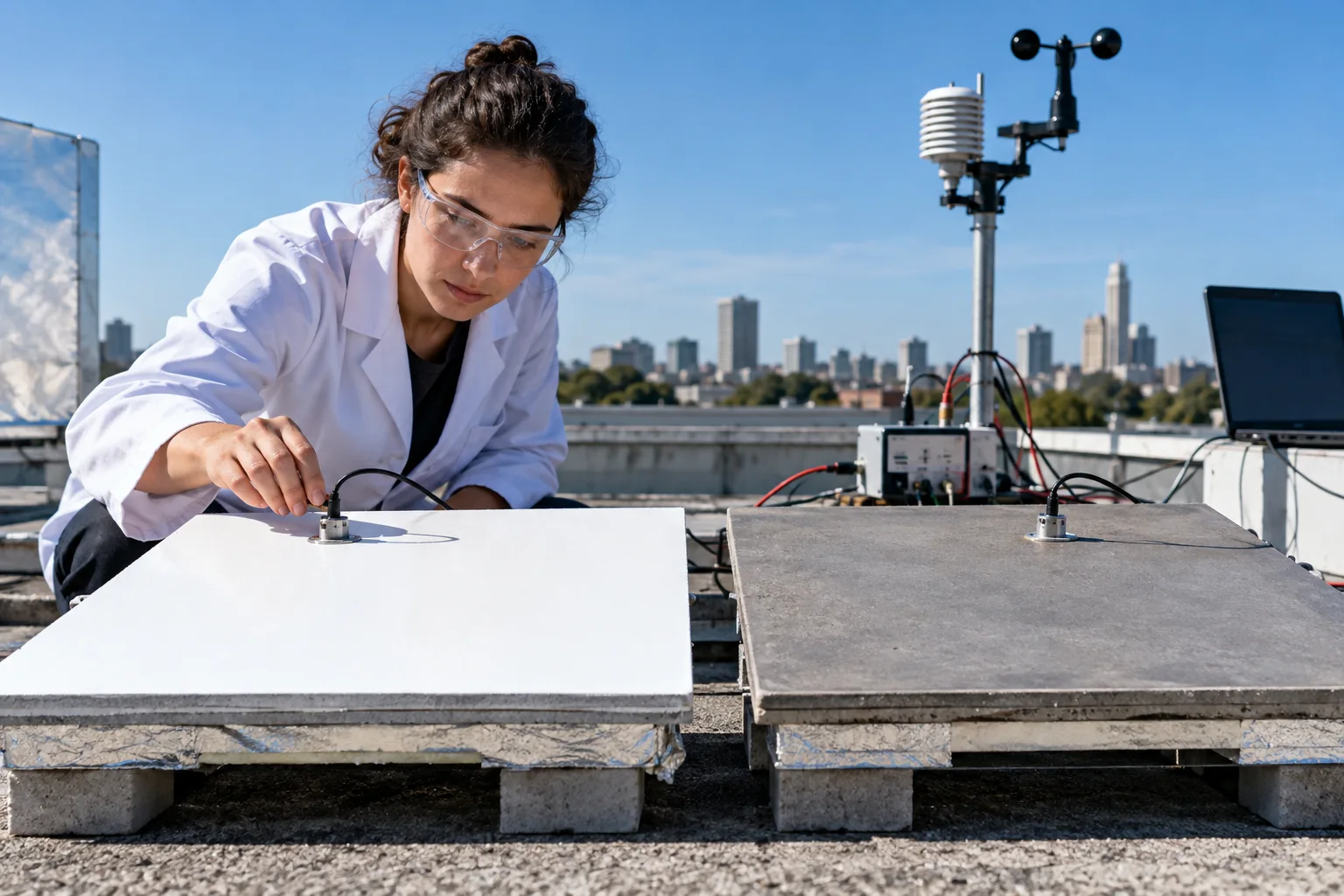
- Passive daytime radiative cooling: Passive daytime radiative cooling uses surfaces that reflect almost all sunlight while giving off heat as infrared light that escapes through the atmosphere into space. Laboratory and rooftop tests have cooled surfaces several degrees below the surrounding air in full sun without using electricity.
What stands in the way
- Published radiative-cooling surfaces are not necessarily breathable, soft, stretchable or comfortable enough for clothing.
- Sweat, dirt, abrasion, laundering, ultraviolet exposure and folding may reduce reflectance or damage the coating.
- Wind, humidity, clouds, garment fit and heat transfer from the body may reduce or eliminate the cooling effect.
- Thermal performance would need to be tested on a complete garment and compared with suitable fabrics under realistic use, not inferred from a flat laboratory sample.
A cheap way to test it
Make matched 10 cm fabric swatches, one with a candidate reflective/emissive coating and one untreated. Place them side by side in direct sun over identical warm-water pouches; log outer and inner temperatures with inexpensive contact thermometers every minute, then repeat in shade and after several wash-and-flex cycles. Treat a cooler outer surface alone as an early materials result, not evidence of a health benefit.