Intracortical speech neuroprosthesis reaches 97.5% accuracy in a man with ALS
What was demonstrated
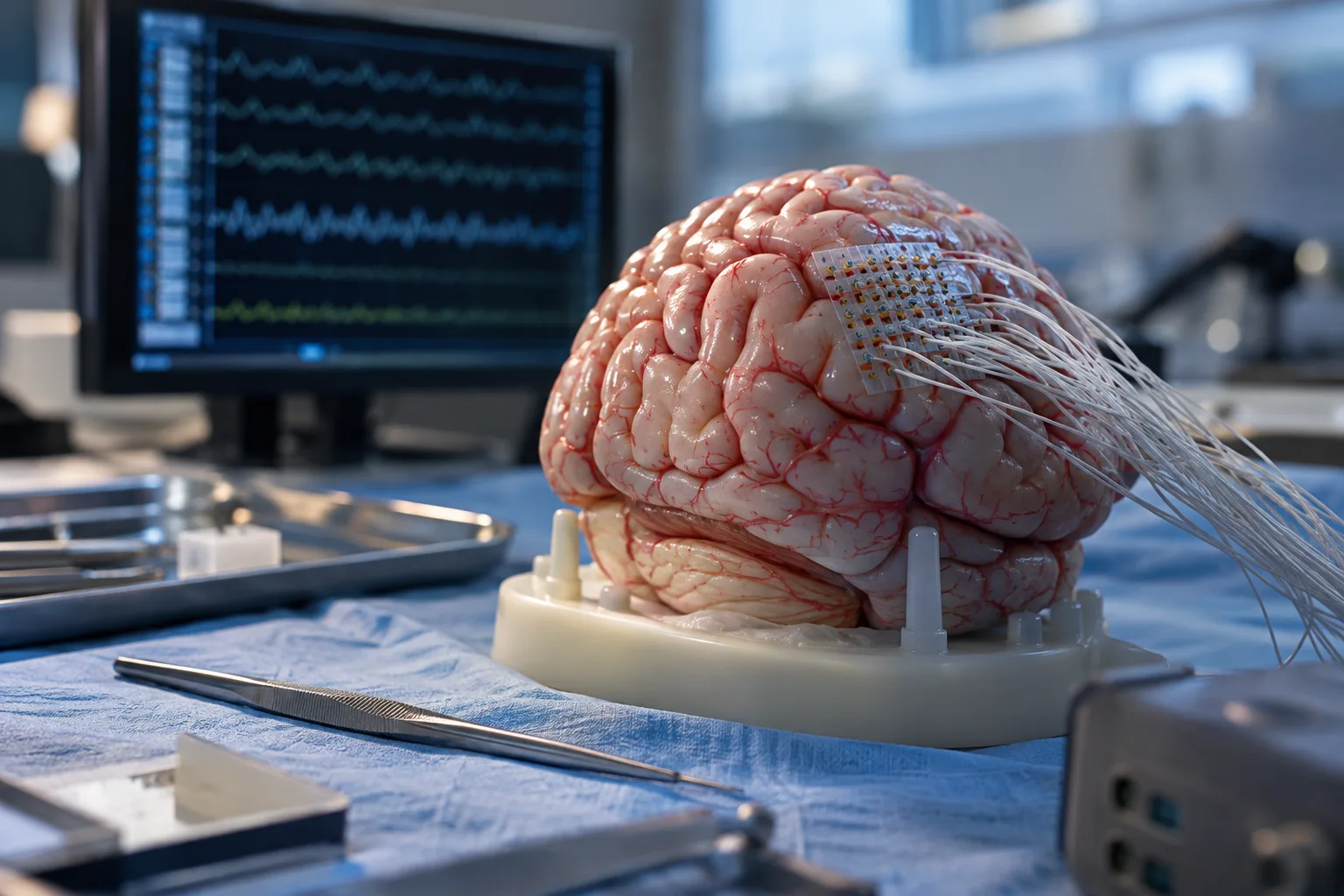
In one 45-year-old man with ALS and severe dysarthria, four microelectrode arrays (256 electrodes) were implanted in the left precentral gyrus as part of the BrainGate2 trial. On the first day of use, after 30 minutes of calibration data, decoding reached 99.6% word accuracy on a 50-word vocabulary. On day two, after 1.4 more hours of training, it reached 90.2% on a 125,000-word vocabulary. With further training it sustained 97.5% accuracy in self-paced conversation over 248 cumulative hours across 8.4 months.
Why it matters
Short calibration time and sustained accuracy with a large vocabulary move speech brain-computer interfaces closer to practical daily communication for people with paralysis.
Caveats
- Single participant; results may not generalise to other people or causes of speech loss.
- Requires invasive brain surgery and implanted hardware with a wired connection.
- Output is decoded text read aloud by text-to-speech, not direct voice synthesis.
Technology profiles
Sources
- peer reviewed paper
An Accurate and Rapidly Calibrating Speech Neuroprosthesis
Nicholas S. Card, Maitreyee Wairagkar, Carrina Iacobacci et al.. New England Journal of Medicine, 15 Aug 2024. DOI: 10.1056/NEJMoa2314132.
Last reviewed 20 Oct 2026.