How far away is a new definition of the second based on optical clocks?
The second is still defined by caesium. The BIPM says optical standards are systematically achieving uncertainties below those of caesium fountain primary standards, and its Consultative Committee for Time and Frequency (CCTF) is working towards a definition based on optical transitions. The BIPM's FAQ sets out a path: CGPM 2026 reviews progress and considers a draft resolution, the CCTF evaluates the criteria, shortlists options and finalises one proposal in 2028 and 2029, and the CGPM decides in 2030, provided there is consensus and the mandatory criteria are met. The sources reviewed do not confirm the outcome of CGPM 2026, and they do not list the mandatory criteria.
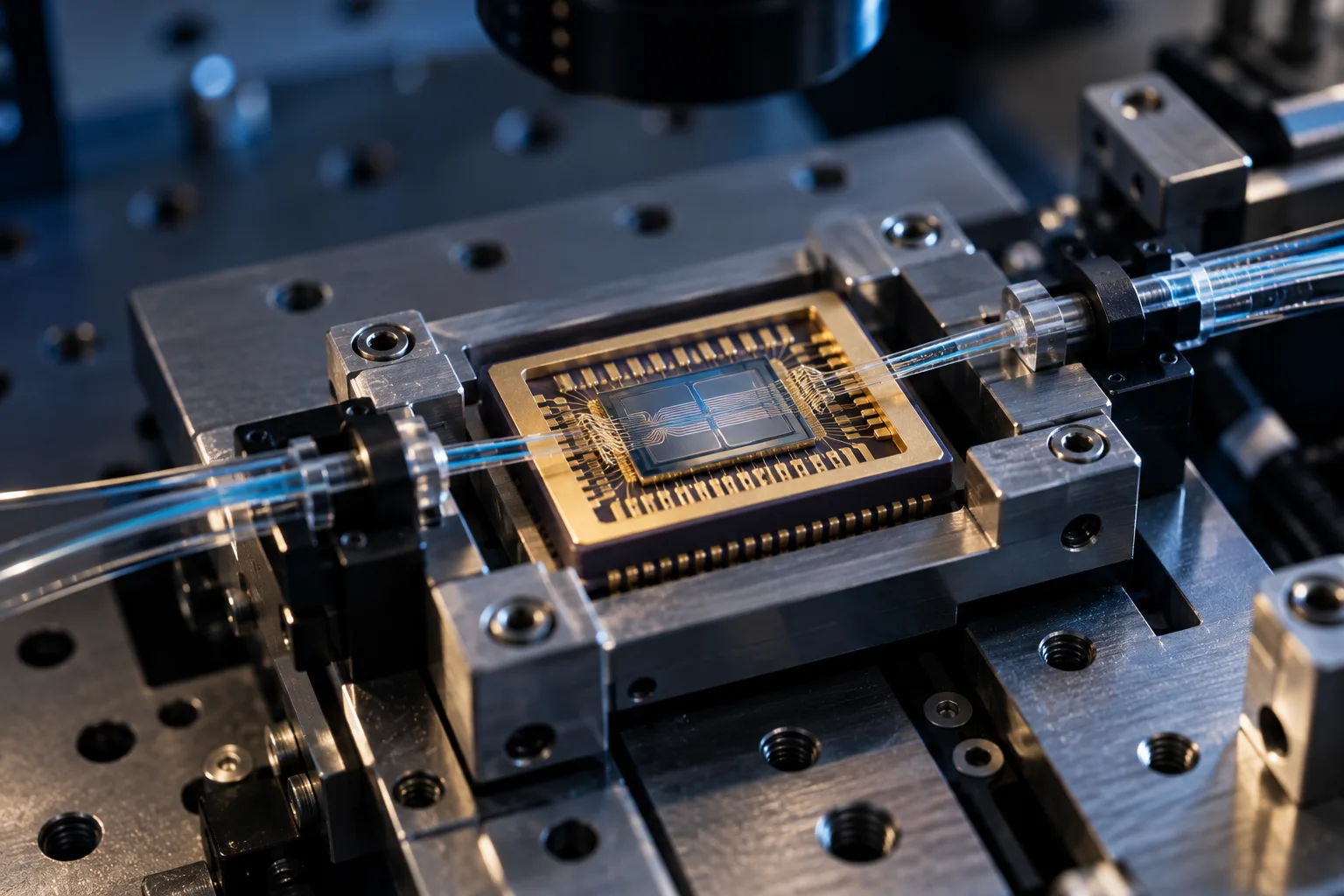
Getting closer. Prototypes exist, but not in real-world use.
Optical clocks have been shown in laboratories to reach uncertainties below those of caesium fountain primary standards, and optical standards from strontium and ytterbium are already reported to the BIPM as candidate species for the second. The new definition itself has not been chosen or adopted, and the sources reviewed do not show optical clocks running as the routine basis of the SI second. The stage is therefore engineering prototype: the clocks work at the required level in the laboratory, but the definition and the time-transfer systems that would support it are not yet in place.
The tech tree
Everything recorded on Vrulum that this future needs, oldest foundations at the top and the goal at the bottom. Lines show what each step requires.
- 2020CCTF roadmap task force set upDone Unlocked.
- 2024Optical clocks reach uncertainties below caesium fountain standardsDone Unlocked.
- 2024Clocks compared across countriesDone Unlocked.
- 2026CGPM 2026 reviews progress and considers Draft Resolution BIn progress Being researched.
- 2028CCTF shortlists and finalises one proposalNot started Locked.
- 2030CGPM 2030 decision on the new definitionNot started Locked.
- Date not recordedOptical clock transitions reported to the BIPMDone Unlocked.
- Date not recordedChoice of definition optionIn progress Being researched.
- Date not recordedMandatory criteria metIn progress Being researched.
- Date not recordedOptical time transfer between continentsIn progress Being researched.
- GoalRedefining the second with optical clocksGoalRequires: Optical atomic clocks, Optical clocks reach uncertainties below caesium fountain standards, CCTF roadmap task force set up, Optical clock transitions reported to the BIPM, Clocks compared across countries, Choice of definition option, Mandatory criteria met, Optical time transfer between continents, CGPM 2026 reviews progress and considers Draft Resolution B, CCTF shortlists and finalises one proposal, CGPM 2030 decision on the new definition. Locked.
The road so far
4 of 10 steps done, 4 in progress.
- Done · Mar 2024Optical clocks reach uncertainties below caesium fountain standards
The BIPM reports that optical standards are systematically achieving uncertainties below those of caesium fountain primary standards. This is a laboratory result. A strontium lattice clock reported in a March 2024 arXiv preprint has a total systematic uncertainty of 8.1 × 10^-19 in fractional frequency units, with all other systematic effects below 1 × 10^-19. The abstract presents this as the uncertainty of one clock under laboratory conditions, not as long-term field performance. [2][4]
- Done · 2020CCTF roadmap task force set up
The CCTF established a task force in 2020 to update the roadmap for the redefinition. The BIPM news item reports this but gives no other roadmap dates. [2]
- DoneOptical clock transitions reported to the BIPM
Candidate species, ytterbium-171 and strontium-87, are reported to the BIPM and contribute to TAI as secondary representations of the second. The BIPM says other radiations that are measured accurately may be accepted as secondary representations in the future. [2]
- Done · 30 Oct 2024Clocks compared across countries
An International Clock and Oscillator Networking (ICON) preprint from October 2024 compared transportable optical lattice clocks from Japan and Europe. The authors report geopotential height offsets at the level of 4 cm, and say the comparison did not need a high-performance frequency link or prior knowledge of the geopotential difference between sites. The preprint is not peer-reviewed in the sources checked, and the clocks and institutions are not named on the arXiv page. [3]
- In progressChoice of definition option
The BIPM FAQ describes three options: fixing the frequency of a single optical transition; defining a new constant from a weighted geometric average of frequencies from several transitions; or fixing another fundamental constant, which the BIPM calls currently unsatisfactory and less favoured. The FAQ does not say which of the first two options is preferred, so the choice is still open. [1]
- In progressMandatory criteria met
The FAQ says eight mandatory criteria and six ancillary conditions have been established. The pages reviewed do not list the criteria or report progress against them. The BIPM news item says a Metrologia review article describes the outputs of the CCTF task force, but the pages reviewed do not say how many criteria are met. [1][2]
- In progressOptical time transfer between continents
The FAQ says GNSS time transfer is not well matched to optical clocks, and that optical fibre links provide the required performance. The sources reviewed do not confirm how widely intercontinental fibre links are used for this purpose. [1]
- In progress · 2026CGPM 2026 reviews progress and considers Draft Resolution B
According to the FAQ, the CGPM in 2026 reviews progress and considers Draft Resolution B, which concerns continued work towards a proposal at CGPM 2030. The outcome of this meeting was not confirmed in the sources reviewed. [1]
- Not started · 2028CCTF shortlists and finalises one proposal
The FAQ says the CCTF in 2028 and 2029 evaluates whether the criteria are fulfilled, shortlists options and finalises one proposal. [1]
- Not started · 2030CGPM 2030 decision on the new definition
The FAQ says the CGPM in 2030 decides on the new definition and its implementation date, provided there is consensus and the mandatory criteria are met. The BIPM news item says adoption by the CGPM is anticipated in 2030 or later. The FAQ states that the current timetable allows at least four years for national legal time definitions to change. [1][2]
Why it matters
The second is the SI unit of time. The BIPM says a definition based on optical transitions would offer an immediate improvement in accuracy of 10 to 100 times, with a possible larger improvement in the long term. Changing the definition would also affect national legal time definitions, which the BIPM timetable says need at least four years to change after a decision.
What stands in the way
- The definition option is not yet chosen. The BIPM lists a single optical transition, a weighted ensemble of transitions and a fixed other constant, and does not say which of the first two is preferred.
- Eight mandatory criteria must be met before adoption. The pages reviewed do not list them or report progress against them.
- Optical clocks need optical fibre links for time transfer, because GNSS is not well matched to them. The FAQ says fibre links provide the required performance, but the sources reviewed do not show intercontinental links in routine use.
- National legal time definitions may need revising, and the BIPM timetable allows at least four years for this after a decision.
Published forecasts
What others have predicted. These are their estimates, not ours.
| Who | Forecast | Timeframe | Made |
|---|---|---|---|
| Bureau International des Poids et Mesures (BIPM) | Adoption of the new definition of the second by the CGPM is anticipated in 2030 or later. The BIPM describes this as an anticipation that depends on the criteria in the CCTF roadmap being met. [2] | 2030 | 20 Feb 2024 |
Signals to watch
- The outcome of CGPM 2026 and whether Draft Resolution B was adopted.
- The CCTF shortlist and single proposal due in 2028 and 2029.
- Published progress against the eight mandatory criteria, for example in the Metrologia review article the BIPM news item refers to.
- Peer-reviewed publication of the ICON comparison of transportable optical clocks.
- Intercontinental optical fibre links used routinely for time transfer between optical clocks.
- National legal time definitions amended ahead of a CGPM 2030 decision.
Sources
- other
Frequently Asked Questions concerning the Redefinition of the Second
Bureau International des Poids et Mesures, 13 Oct 2026. - other
Progressing towards the redefinition of the second
Bureau International des Poids et Mesures, 20 Feb 2024. - preprint
International comparison of optical frequencies with transportable optical lattice clocks
International Clock and Oscillator Networking (ICON) Collaboration. arXiv, 30 Oct 2024. - preprint
A clock with 8×10⁻¹⁹ systematic uncertainty
Alexander Aeppli, Kyungtae Kim, William Warfield et al.. arXiv (published as Physical Review Letters 133, 023401, 2024), 15 Mar 2024.
Last reviewed 21 Oct 2026.