How far are we from room-temperature superconductors?
No material has yet been shown to superconduct at room temperature and ambient pressure in a result that independent labs have reproduced. The best-supported high-temperature results come from hydrogen-rich compounds under extreme pressure, where a 2015 Nature paper reported superconductivity at 203 K at about 90 GPa. Two high-profile room-temperature claims, from 2020 and 2023, were retracted by Nature.
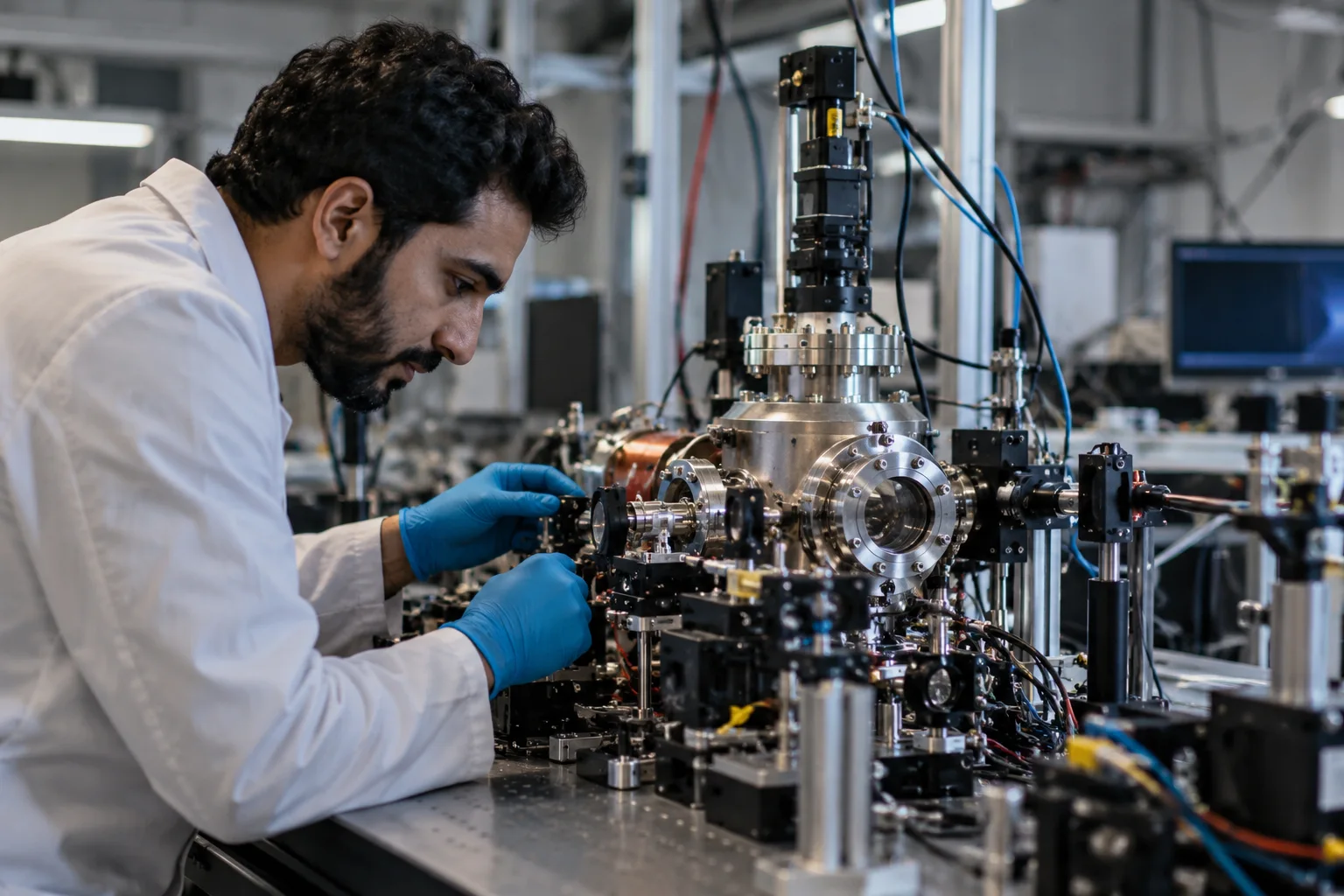
Very far away. The basic science has not been shown to work.
Superconductivity at high temperature has been reported under extreme pressure in hydrogen-rich compounds. Room-temperature superconductivity at ambient pressure has not been shown in a result that independent groups have reproduced. Two high-profile room-temperature claims, from 2020 and 2023, were retracted, so the stage is science unproven.
The tech tree
Everything recorded on Vrulum that this future needs, oldest foundations at the top and the goal at the bottom. Lines show what each step requires.
- 2015Superconductivity above 200 K at high pressureDone Unlocked.
- Date not recordedRoom-temperature superconductivity at high pressure, independently confirmedNot started Locked.
- Date not recordedRoom-temperature superconductivity at ambient pressure, reproduced by independent labsNot started Locked.
- Date not recordedZero resistance and a clear magnetic response at ambient pressureNot started Locked.
- Date not recordedRoom-temperature material made into long wires or tapesNot started Locked.
- Date not recordedRepeatable production at useful size and costNot started Locked.
- Date not recordedDevices using a room-temperature superconductor in serviceNot started Locked.
- GoalRoom-temperature superconductorsGoalRequires: Quantum sensors, Superconductivity above 200 K at high pressure, Room-temperature superconductivity at high pressure, independently confirmed, Room-temperature superconductivity at ambient pressure, reproduced by independent labs, Zero resistance and a clear magnetic response at ambient pressure, Room-temperature material made into long wires or tapes, Repeatable production at useful size and cost, Devices using a room-temperature superconductor in service. Locked.
The road so far
1 of 7 steps done.
- Done · 17 Aug 2015Superconductivity above 200 K at high pressure
Drozdov and colleagues reported zero resistance and a magnetic susceptibility signal at 203 K in sulfur hydride at approximately 90 GPa. A pronounced isotope shift was suggestive of an electron-phonon mechanism. [1]
- Not startedRoom-temperature superconductivity at high pressure, independently confirmed
A 2020 Nature paper reported superconductivity at 287.7 K at about 267 GPa in a carbon-containing sulfur hydride. The paper was retracted in 2022, so this result is not treated as achieved. [2][3]
- Not startedRoom-temperature superconductivity at ambient pressure, reproduced by independent labs
No ambient-pressure result at room temperature has been reproduced in the sources reviewed. A 2023 Nature paper on nitrogen-doped lutetium hydride claimed near-ambient superconductivity and was retracted in November 2023. [4][5]
- Not startedZero resistance and a clear magnetic response at ambient pressure
A candidate material would need zero electrical resistance and a clear magnetic response at ambient pressure. Several independent groups would need to measure both, and publish raw data that others can check.
- Not startedRoom-temperature material made into long wires or tapes
Superconductors for cables and magnets must carry high current in a magnetic field, which usually means long wires or tapes. No ambient-pressure room-temperature material has yet been made into this form.
- Not startedRepeatable production at useful size and cost
Synthesis must be repeatable at a useful scale and cost, and the material must stay stable in air and in use.
- Not startedDevices using a room-temperature superconductor in service
Power cables, motors or magnets would use a room-temperature superconductor only after the earlier steps are met. No such device is in service.
Why it matters
A material that carries electricity with no resistance at everyday temperatures and pressures could cut energy losses in power cables and simplify magnets and electronics. Today's superconductors need cryogenic cooling or very high pressure, which limits where they can be used. A room-temperature material that other labs can repeat would open the way to new applications.
What stands in the way
- No ambient-pressure room-temperature superconductor has been reproduced by independent labs.
- Two high-profile room-temperature claims, from 2020 and 2023, were retracted, so new claims need independent checks of raw data before they are taken seriously.
- The best-supported high-temperature results need pressures of about 90 GPa or more, which cannot be used in everyday devices.
- Theory cannot yet reliably predict new room-temperature superconductors, so candidate searches rely heavily on trial and error.
- Making a candidate into long wires or tapes that carry current in a magnetic field has not been shown.
Signals to watch
- An ambient-pressure superconductor above room temperature confirmed by two or more independent labs, with raw data openly available.
- Peer-reviewed replication of high-temperature superconductivity in hydrides at lower pressure.
- Zero resistance and a clear magnetic response measured at ambient pressure in one material, shown by several groups.
- A room-temperature candidate made into a long wire or tape that carries current in a magnetic field.
- Published synthesis methods that other labs can repeat at a useful scale.
Sources
- peer reviewed paper
Conventional superconductivity at 203 kelvin at high pressures in the sulfur hydride system
A. P. Drozdov, M. I. Eremets, I. A. Troyan et al.. Nature (Springer Nature), 17 Aug 2015. - peer reviewed paper
RETRACTED ARTICLE: Room-temperature superconductivity in a carbonaceous sulfur hydride
Elliot Snider, Nathan Dasenbrock-Gammon, Raymond McBride et al.. Nature (Springer Nature), 14 Oct 2020. - other
Retraction Note: Room-temperature superconductivity in a carbonaceous sulfur hydride
Elliot Snider, Nathan Dasenbrock-Gammon, Raymond McBride et al.. Nature (Springer Nature), 26 Sept 2022. - peer reviewed paper
RETRACTED ARTICLE: Evidence of near-ambient superconductivity in a N-doped lutetium hydride
Nathan Dasenbrock-Gammon, Elliot Snider, Raymond McBride et al.. Nature (Springer Nature), 8 Mar 2023. - other
Retraction Note: Evidence of near-ambient superconductivity in a N-doped lutetium hydride
Nathan Dasenbrock-Gammon, Elliot Snider, Raymond McBride et al.. Nature (Springer Nature), 7 Nov 2023.
Last reviewed 21 Oct 2026.