Robotics and artificial muscles
Robots, soft actuators, grippers and bio-inspired movement.
Technology profiles

Agricultural spray drones
Spray drones are unmanned aircraft that apply crop treatments from low altitude. In the UK, HSE states there are currently no commercial authorisations for pesticide spraying by drone. Published comparisons report more spray drift than from ground sprayers, and one life-cycle study estimates lower energy use per hectare, but evidence on pesticide savings is limited.
Artificial muscles (soft actuators)
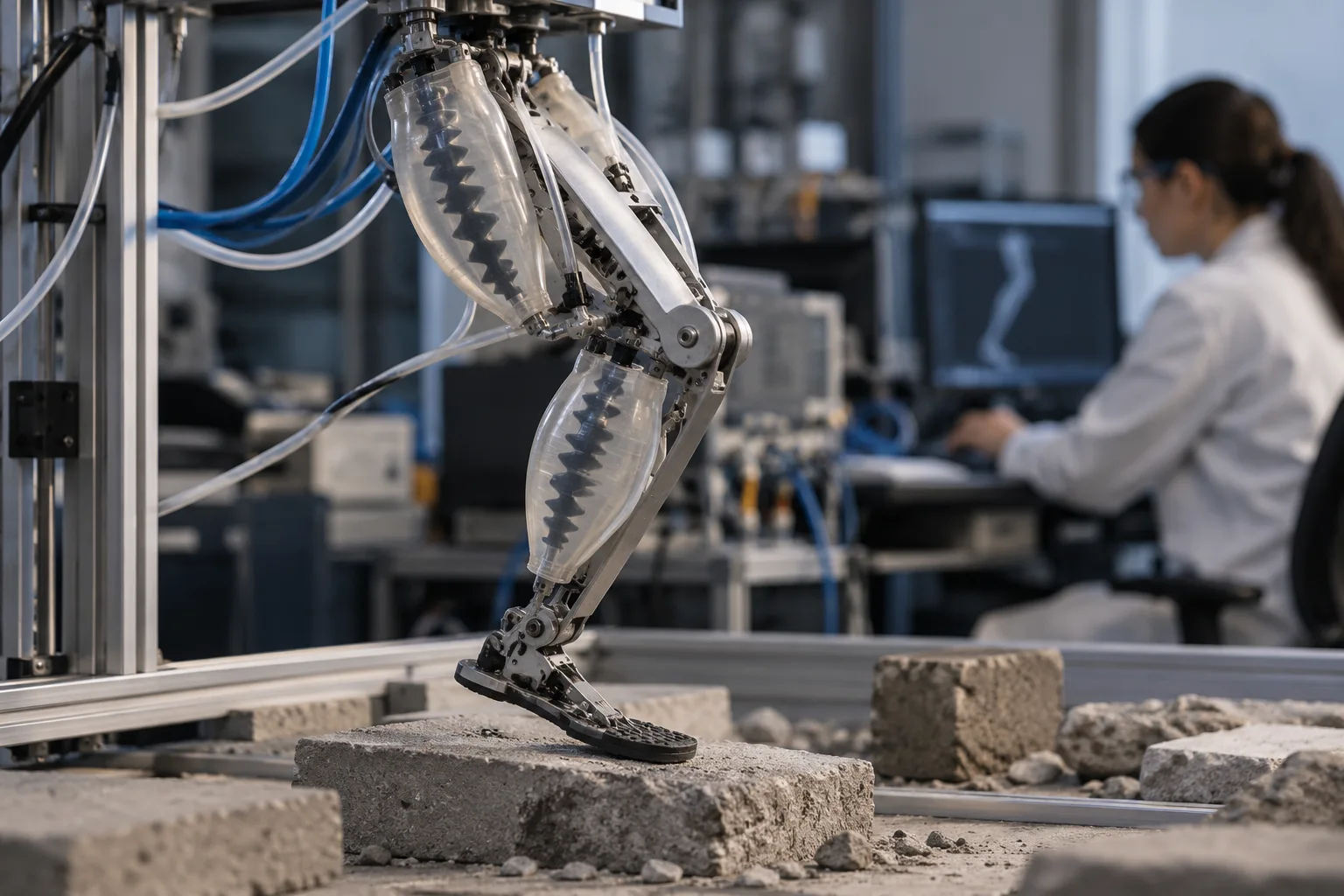
Artificial muscles are soft materials and devices that contract, expand or twist when given heat, electricity or fluid pressure, producing movement in a way that resembles biological muscle. Laboratory systems span heated fibres, pneumatic structures and electrohydraulic or dielectric elastomer actuators. A 2026 dielectric elastomer demonstrated large strain over repeated cycles and recovery after damage, but its repairs required hours of heating and the wider field still faces power, control, safety and scale-up constraints.
Autonomous road vehicles
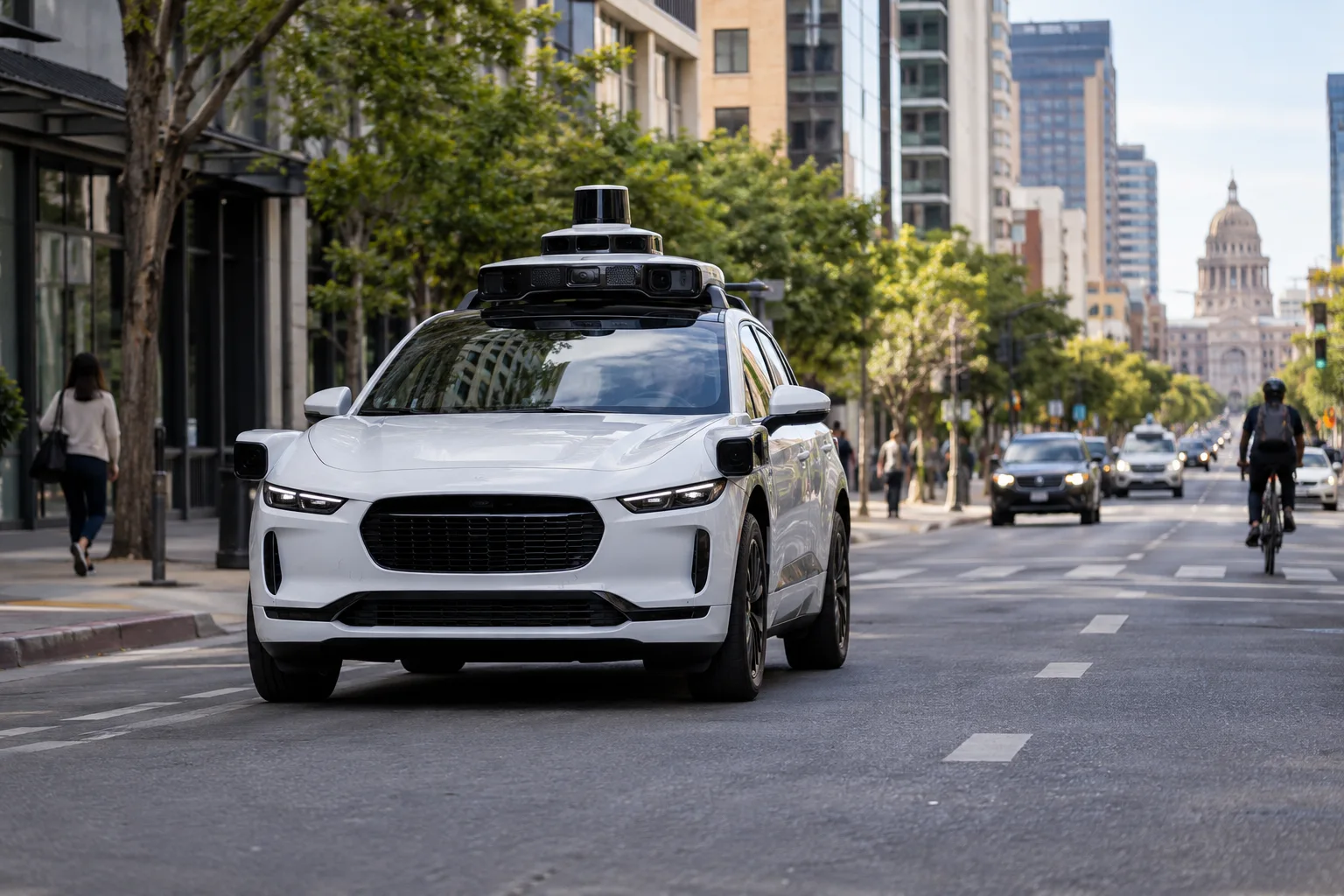
Autonomous road vehicles do some or all of the driving without a human in control. Driverless robotaxis now operate in several US cities, and independent and company data both report fewer crashes per mile than human drivers, but the evidence covers limited areas and mileage.
Autonomous surgical robots
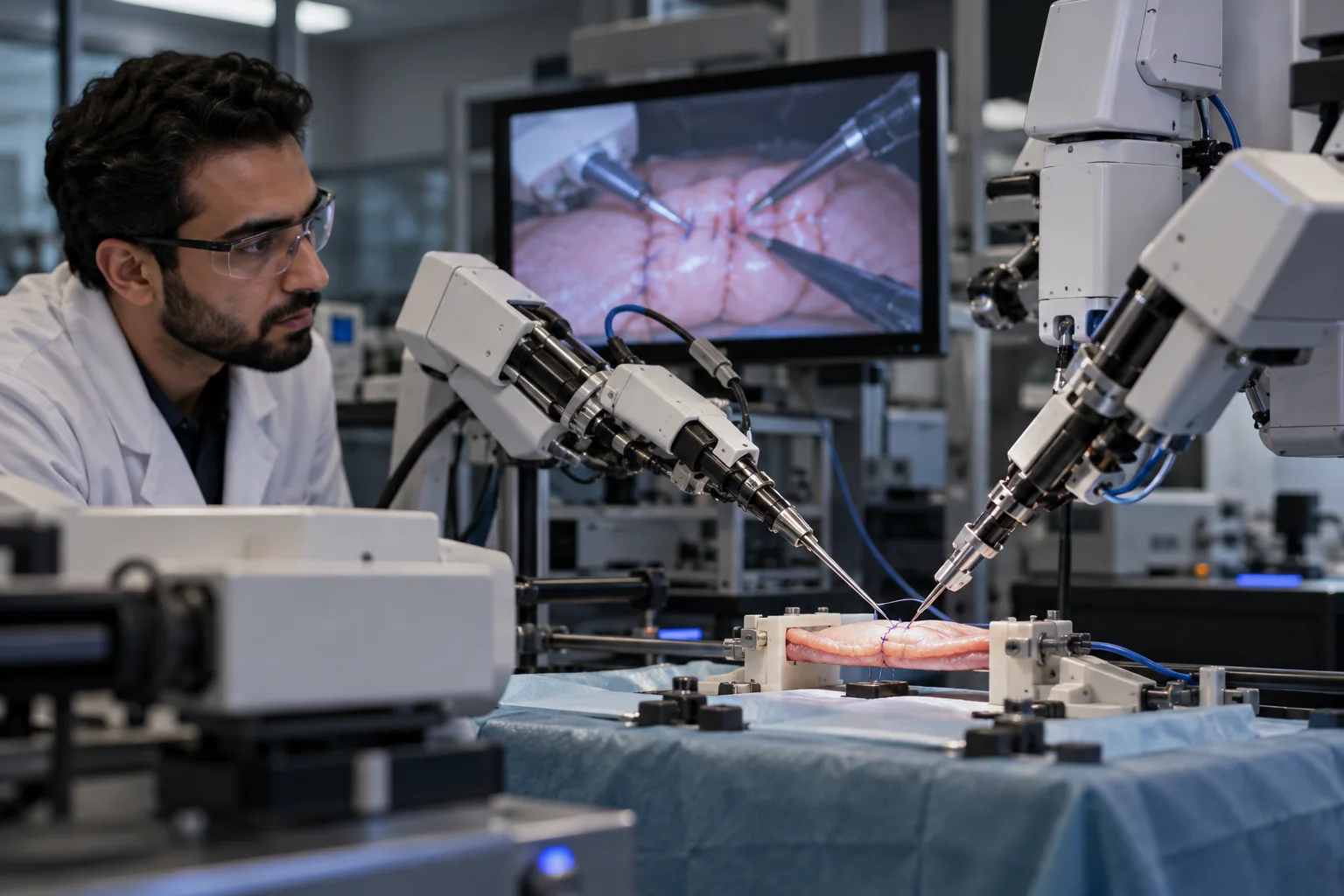
Autonomous surgical robots carry out defined surgical steps, such as placing stitches, on their own after a surgeon sets up or approves the plan. Studies so far use model tissue, ex vivo tissue and a small number of pigs, and no human use is described in the sources reviewed here.

Autonomous underwater vehicles
Autonomous underwater vehicles are robots that travel and measure in the ocean without a pilot on board or a cable to a ship. Argo floats, ocean gliders and under-ice vehicles now collect large amounts of ocean data, but batteries, the lack of GPS underwater and, beneath ice, the lack of any surface contact still limit how far and how long they can work.
Bionic limbs with nerve and bone connection
Artificial arms and legs are being attached directly to bone and linked to the wearer's nerves and muscles, so they can be controlled more naturally and, in early studies, give some sense of touch. A bone-anchored system is approved in the US for some above-knee amputees, while nerve and muscle interfaces are still tested in small studies.
Delivery drones
Delivery drones are small uncrewed aircraft that carry parcels and urgent supplies from a hub to a customer. Companies report large delivery counts and approvals to fly beyond the operator's line of sight, but most figures come from the operators themselves. Services have been paused after crashes and software faults, and two Colorado towns have frozen new hub applications.
Hoverboards
A complete guide to wheeled hoverboards, magnetic levitation and flying platforms: what has been demonstrated, what each approach requires, and what remains speculative.
Humanoid robots
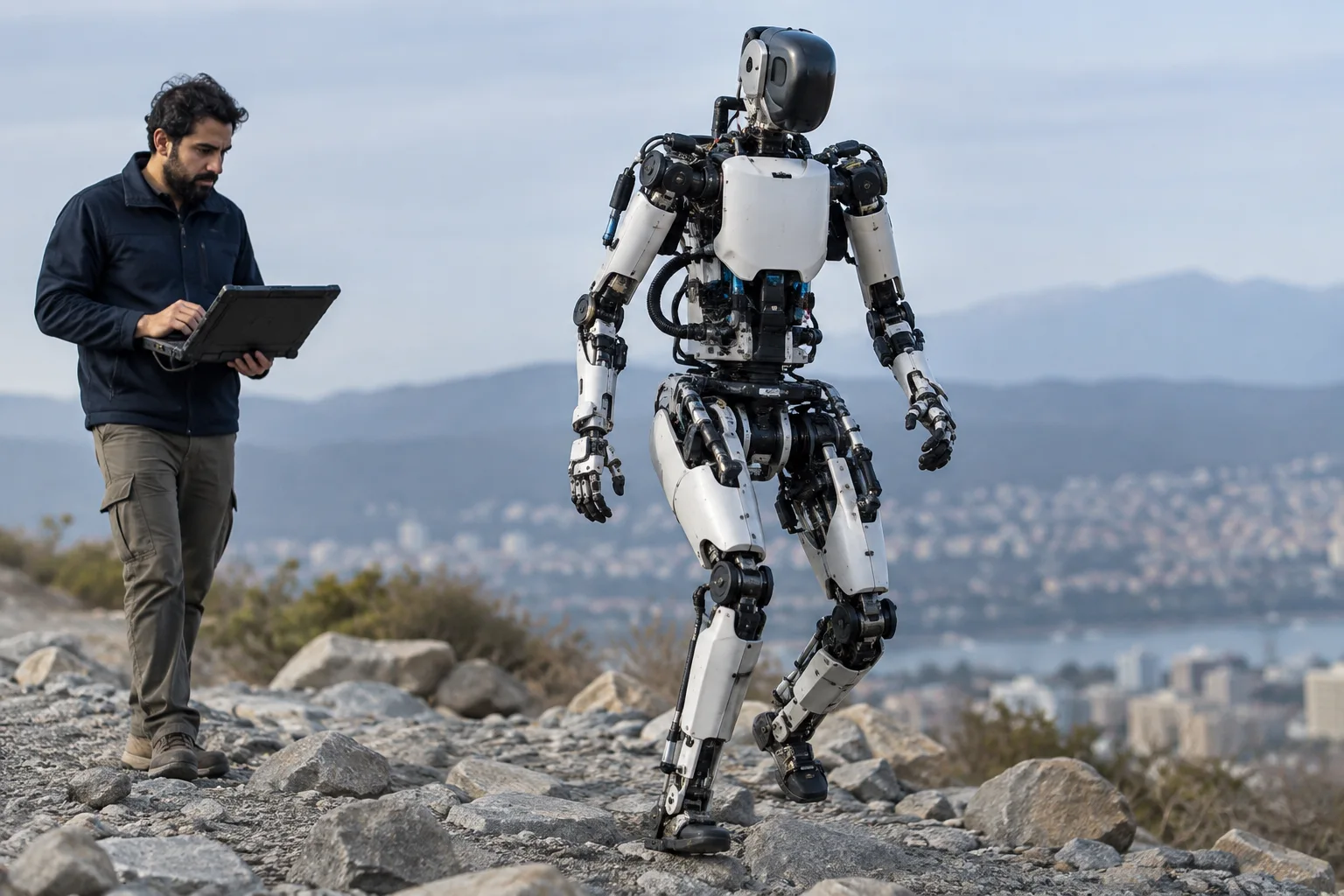
Humanoid robots are machines built roughly in the shape of a person, with two legs and two arms. Learned walking controllers have been shown outdoors, and companies plan factory use, but the sources reviewed here do not show useful work at scale.
In-space servicing and assembly
In-space servicing and assembly means building, repairing or upgrading spacecraft in orbit rather than on the ground. Assembly from launched modules is established through the International Space Station, while robotic servicing is only beginning to fly and robotic construction from raw material remains at test or proposal stage.
Jet suits and jetpacks
Jet suits and jetpacks are wearable frames that carry small jet engines, letting a trained person fly for a few minutes. Trials by an air ambulance service and a navy show the idea can work, but short flight times, high cost, noise and unsettled rules keep use niche.
Laser and robotic weeding
Robots that weed with lasers, targeted sprays or mechanical tools aim to reduce the blanket herbicide applied to crops. Field trials show strong weed control from lasers on young weeds and substantial herbicide savings from targeted spraying in some trials, but the savings depend heavily on weed pressure and the independent evidence is still thin.
Legged robots
Four-legged robots walk over stairs, mud, rubble and other rough ground where wheels struggle, and makers now sell them for inspection work at industrial sites. Learned control software has made them more robust on uneven terrain, but Spot's battery life of about 90 minutes and payload of about 14 kg still limit what a robot can do on a mission.
Robotic fruit and vegetable harvesting
Robots that pick strawberries, apples, sweet peppers and other crops have moved from research prototypes into field trials and early commercial pilots. Published field trials report first-attempt success rates from about 18% to 97.1%, and occlusion, ripeness detection and picking speed remain the main limits.
Soft exosuits
Soft exosuits are light, textile-based wearable robots that use cables and motors to add force to the hip or ankle while a person walks. Lab studies show small immediate gains in walking efficiency and symmetry, and one soft exosuit system has reported FDA clearance for sale to stroke rehabilitation centres, but long-term clinical benefit is not yet well established.
Soft robotic grippers
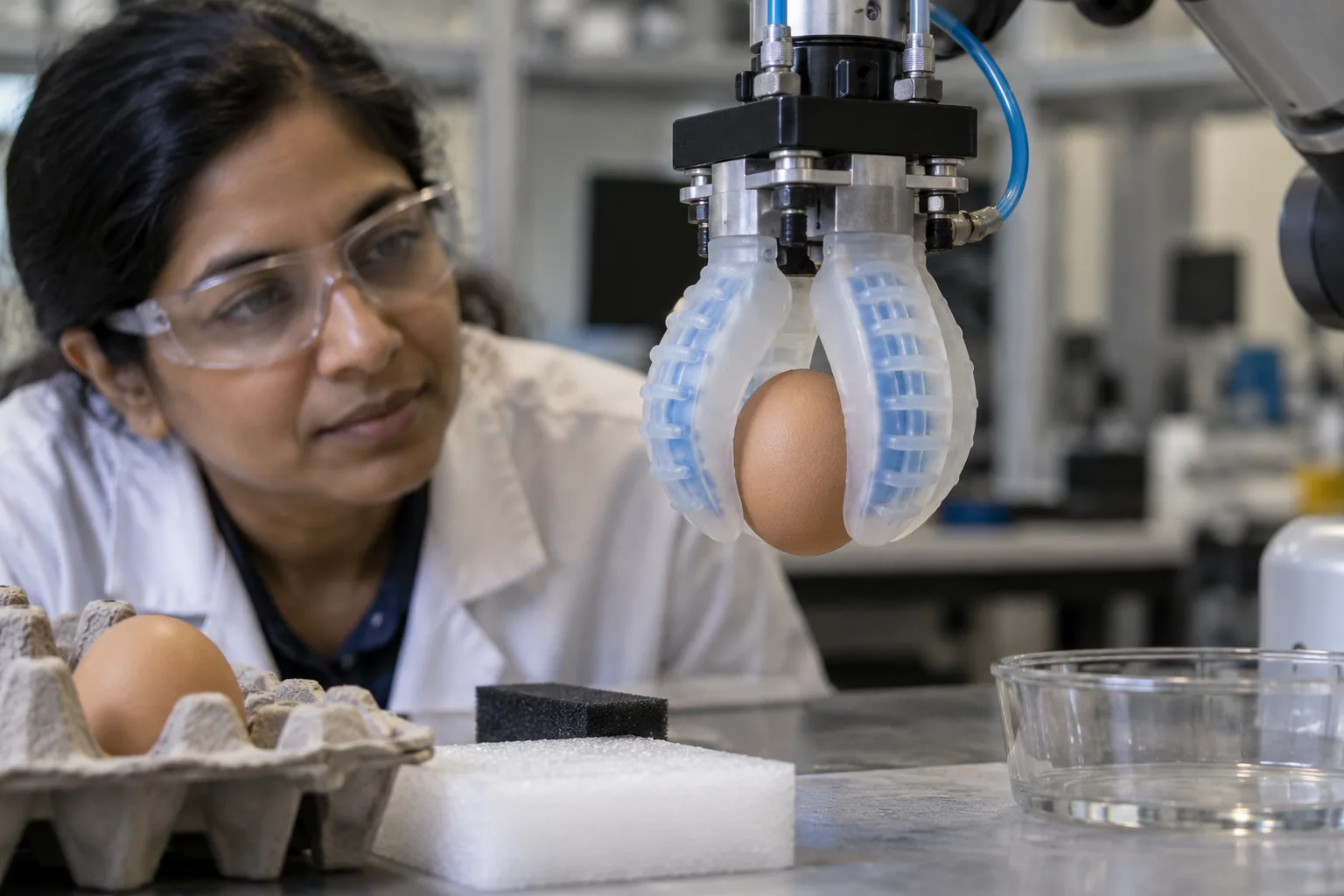
Soft robotic grippers pick things up with flexible, deformable materials instead of rigid metal fingers, so they can handle delicate or oddly shaped objects. The field is active in research and prototypes, but the sources reviewed here do not show wide industrial use.
Swarm robotics
Swarm robotics coordinates many simple robots through local sensing and communication rather than a central controller. Laboratory swarms have reached 1,024 robots, while the largest drone shows, military drone programmes and warehouse fleets mostly rely on central control.
Thin-film flexible robots
Thin-film flexible robots are less than a millimetre thick and are built from flexible circuit films. They creep across surfaces and into narrow gaps using electrostatic forces, and a 2026 laboratory prototype was shown inspecting a gap and grinding and machining test workpieces, although it still depends on external high-voltage equipment.
Warehouse picking robots
Warehouse picking robots grab individual products from bins or shelves so that orders can be packed item by item. Amazon, Ocado and AI companies are deploying them, but the public performance figures so far come mostly from company announcements and controlled lab tests.
How far away are we?
A complete map of the world's seabed
Scaling up · 2 of 6 steps done
Artificial limbs that move and feel like real ones
Pilots · 7 of 10 steps done
Crops picked by robots instead of people
Pilots · 3 of 8 steps done
Drone deliveries as an everyday service
Pilots · 1 of 6 steps done
Factories that run without people
Pilots · 3 of 5 steps done
Flying to work in a jet suit
Engineering prototypes · 3 of 7 steps done
Humanoid robots in the home
Engineering prototypes · 4 of 9 steps done
Robot dogs inspecting industrial sites
Pilots · 4 of 9 steps done
Robot surgeons that operate on their own
Engineering prototypes · 3 of 7 steps done
Robot swarms doing real work
Engineering prototypes · 5 of 8 steps done
Robots as thin as paper
Engineering prototypes · 3 of 6 steps done
Robots that can pick any item in a warehouse
Pilots · 3 of 8 steps done
Self-driving cars on every road
Pilots · 2 of 7 steps done
Soft suits that make walking easier
Pilots · 4 of 8 steps done
Breakthroughs
Thin flexible robot demonstrates inspection and machining on laboratory structures
The 970 μm-thick, 19.7 g robot used a two-degree-of-freedom electrostatic actuator and electrostatic adhesive feet. In laboratory tests it achieved 21.7 μm actuator repeatability, a maximum actuator speed of 290 mm/s and 1.07 N output force; robot demonstrations included carrying up to 4.06 times its own mass, inspection of a 7 mm-high gap, curved-surface grinding and microscale electrical-discharge machining. It also withstood an impact from a 3 kg weight.
AgiBot humanoid robots run a loading task on a Chinese electronics production line
AgiBot and its deployment partner Longcheer Technology said AGIBOT G2 humanoid robots were deployed at a Longcheer consumer electronics plant in Nanchang, China, mainly at MMIT (multimedia integrated testing) stations for precision loading and unloading of tablets. The company reported throughput of up to 310 units per hour, a cycle time of about 19 to 20 seconds per operation, a success rate over 99% in continuous operation, over 140 hours of cumulative continuous operation with downtime loss below 4%, and production line integration completed within 36 hours. These are company-reported figures. The announcement says multiple G2 robots are deployed but gives no exact robot or station count, and it cites no third-party testing.
Zipline reports 2 million commercial drone deliveries, company figures only
In a company press release dated 21 January 2026, Zipline said it had surpassed two million commercial deliveries, flown more than 125 million autonomous commercial miles and delivered more than 20 million items. The release says its deliveries were made without a serious injury, but gives no count of injuries. It says it has more deliveries than all other companies in the sector combined, but names no companies and gives no time period for that comparison. The release does not define serious injury and gives no independent verification of its figures.
Hybrid humanoid finger grasps tofu and pinches 0.1 mm paper in lab tests
In laboratory experiments reported in the abstract, grippers built from a humanoid finger grasped tofu, pinched 0.1 mm paper, held a 23.2 cm basketball and supported 5.275 kg weights. The finger has rigid bones, flexible springs and a soft silicone skin, and a pneumatic actuator sits between the bones and the skin. The sources checked report no success rates, trial counts or grip force figures.
Robot performs gallbladder removal steps autonomously on eight ex vivo specimens
A hierarchical control framework (SRT-H) combined a high-level planner that issues task and corrective instructions in natural language with a low-level policy that generates robot trajectories, trained by imitation learning. In ex vivo cholecystectomy experiments it completed the targeted procedure steps with a 100% success rate across eight gallbladders, without human intervention.
Amazon says its Vulcan picking robot can handle about 75% of stocked item types
Amazon reports that its Vulcan robot, which uses force-feedback sensors and a camera, can pick and stow approximately 75% of the various types of items it stores at its fulfilment centres. Amazon describes its speed as comparable to that of front-line employees. When Vulcan cannot move a specific item, it can ask a human partner to take over. Amazon names its Spokane and Hamburg sites as places where Vulcan is focused on picking from the top rows of inventory pods. These are company statements, not results from an independent test.
Soft robotic shorts cut older adults' walking energy cost by 10.48% on level ground
Researchers at TUM and collaborators tested WalkON, a pair of soft robotic shorts that assist hip flexion. Young adults walking 500 m uphill on a hiking trail had a 17.79% reduction in metabolic cost of transport with the shorts. A group of older adults walking 400 m on a flat outdoor track had a 10.48% reduction in metabolic cost during level walking, and gave a mean perceived control score of 6.09 out of 7. The TUM research portal record reports these figures from the paper. The number of participants in each group was not confirmed from the sources reviewed.
Compact soft hip wearable cut walking metabolic cost by 12.7% in a preliminary study of eight adults
Researchers at TUM and collaborators tested LM-Ease, a compact, tendon-driven soft wearable robot for hip assistance, in eight healthy young adults. The abstract reports a 12.7% reduction in metabolic cost during ground walking. The device switches between assistance profiles for sitting, standing and walking. The same abstract reports an average reduction in muscle activation of 15.6% during stand-to-sit and 17.8% during sit-to-stand. The authors describe these results as preliminary.
Robotic leg driven by electrohydraulic artificial muscles hops over varied terrain
ETH Zurich and Max Planck Institute for Intelligent Systems researchers built a musculoskeletal leg driven by antagonistic pairs of electrohydraulic (HASEL) artificial muscles. Mounted on a boom arm, it moved at gait frequencies above 5 Hz, jumped up to 40% of its own height and hopped over grass, sand, gravel, pebbles and large rocks using open-loop force control. It had a cost of transport of 0.73 and, while squatting, used about 1.2% of the energy of a conventional electromagnetic counterpart. It also detected obstacles through capacitive self-sensing.