AI and autonomous agents
Machine learning systems, autonomous agents and the hardware that runs them.

Technology profiles
AI coding agents
AI coding agents are systems that read code, edit files, run tests and try again with little step-by-step human direction. Their benchmark scores are contested as a measure of real-world ability, and controlled studies of whether they speed up experienced developers give mixed, time-bound results. Security and reliability limits remain.
AI mathematical reasoning and theorem proving
AI systems now solve some olympiad-level mathematics problems, including a score at gold-medal level at the 2025 International Mathematical Olympiad. Formal proof systems that check each step in the Lean language are the most rigorous of these approaches, but results on contest problems do not yet show that AI can solve open research problems.
AI protein structure prediction
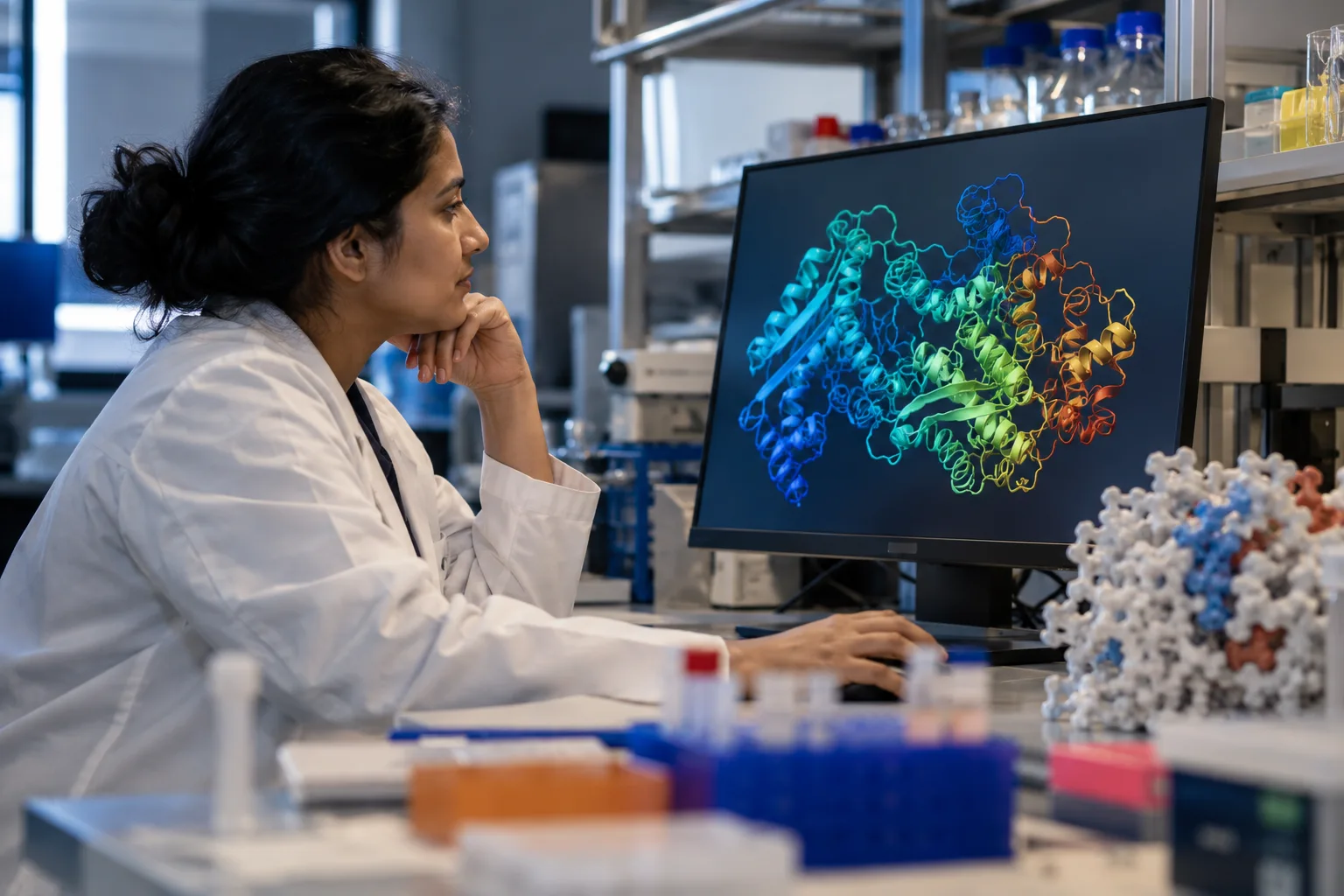
AI systems can now predict the three-dimensional shape of many proteins from their amino acid sequence, often with accuracy close to experimental methods. The clearest evidence is for single proteins. Accuracy for flexible proteins, complexes and proteins with few known relatives is less well established.
AI tutors
AI tutors are chatbots built on large language models that help students learn through explanation, practice questions and feedback. Randomised trials report mixed results: some find gains, while others find no benefit or lower performance when students can simply ask for answers.

AI weather forecasting
Machine-learning weather models such as GraphCast, GenCast and ECMWF's AIFS produce global forecasts in minutes. In published and operational tests they match or beat leading physics-based systems on many headline measures, but they still struggle with small-scale detail, the early growth of forecast error and physical consistency.
AI-assisted chip design
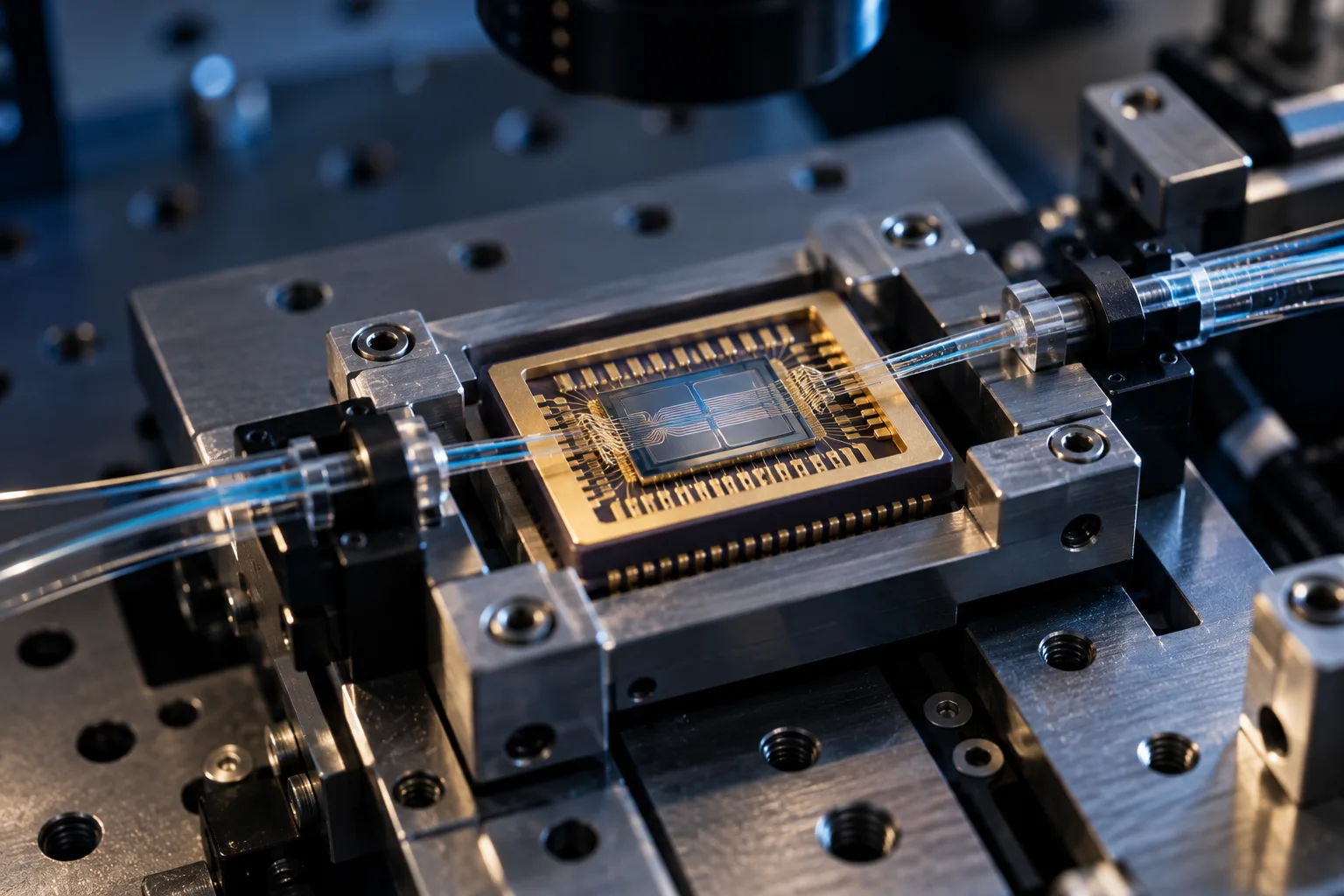
AI-assisted chip design uses machine learning to place large circuit blocks on a chip and to tune the settings of design software. Google's AlphaChip and commercial tools from Synopsys and Cadence report large gains, but Google's central performance claims are disputed and the company figures have not been independently verified.
Autonomous laboratories
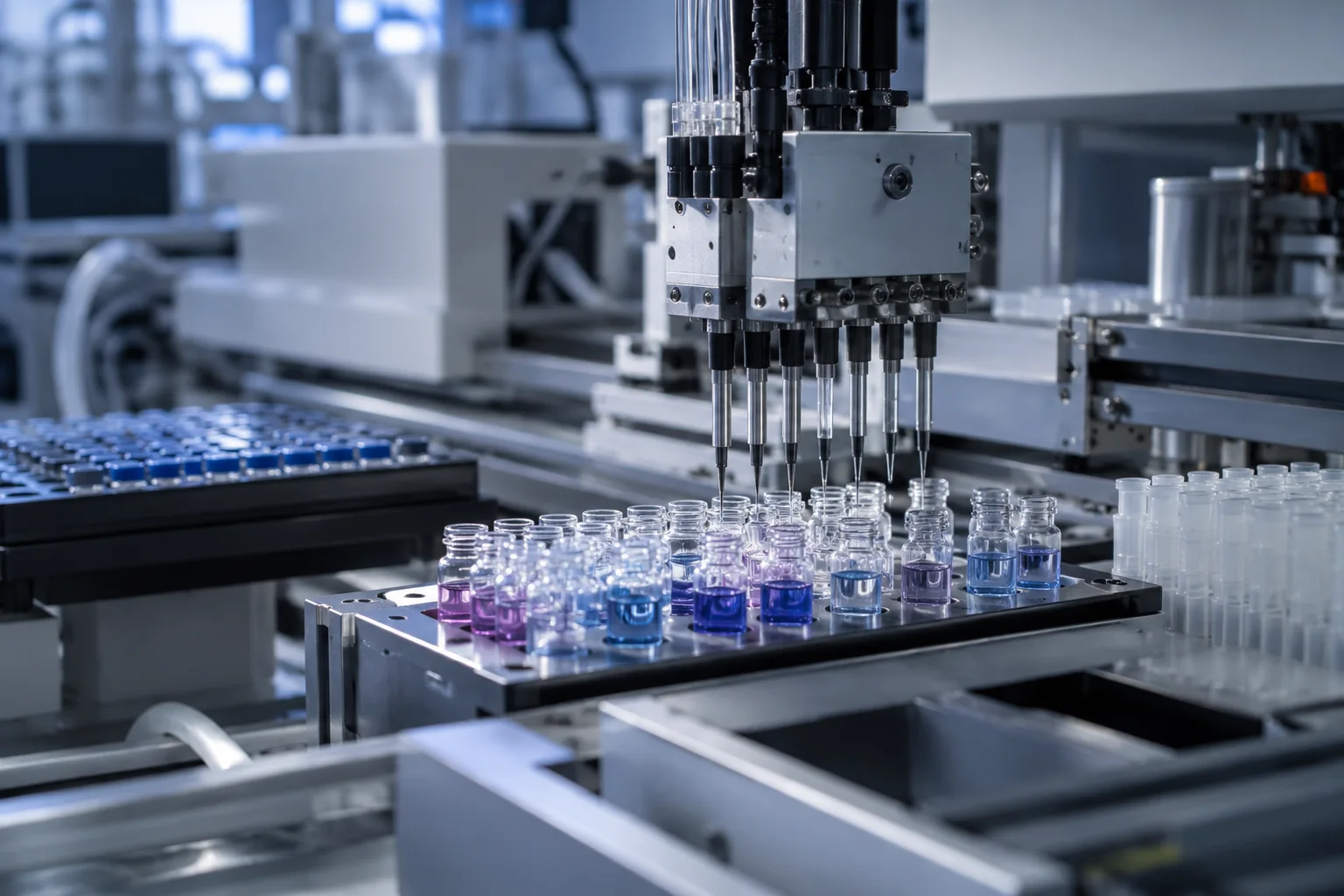
Autonomous laboratories combine automated instruments with software that selects or adapts experiments based on measured results. Research platforms have demonstrated this approach in catalyst discovery, nanoparticle synthesis, inorganic powder synthesis, multi-step fluidic chemistry, protein engineering, exploratory chemistry and optical-material screening. Their autonomy is bounded by human-defined objectives, selected candidate spaces, configured instruments and validation requirements; the examples do not show general-purpose laboratories that independently choose and verify any scientific question.
Autonomous road vehicles
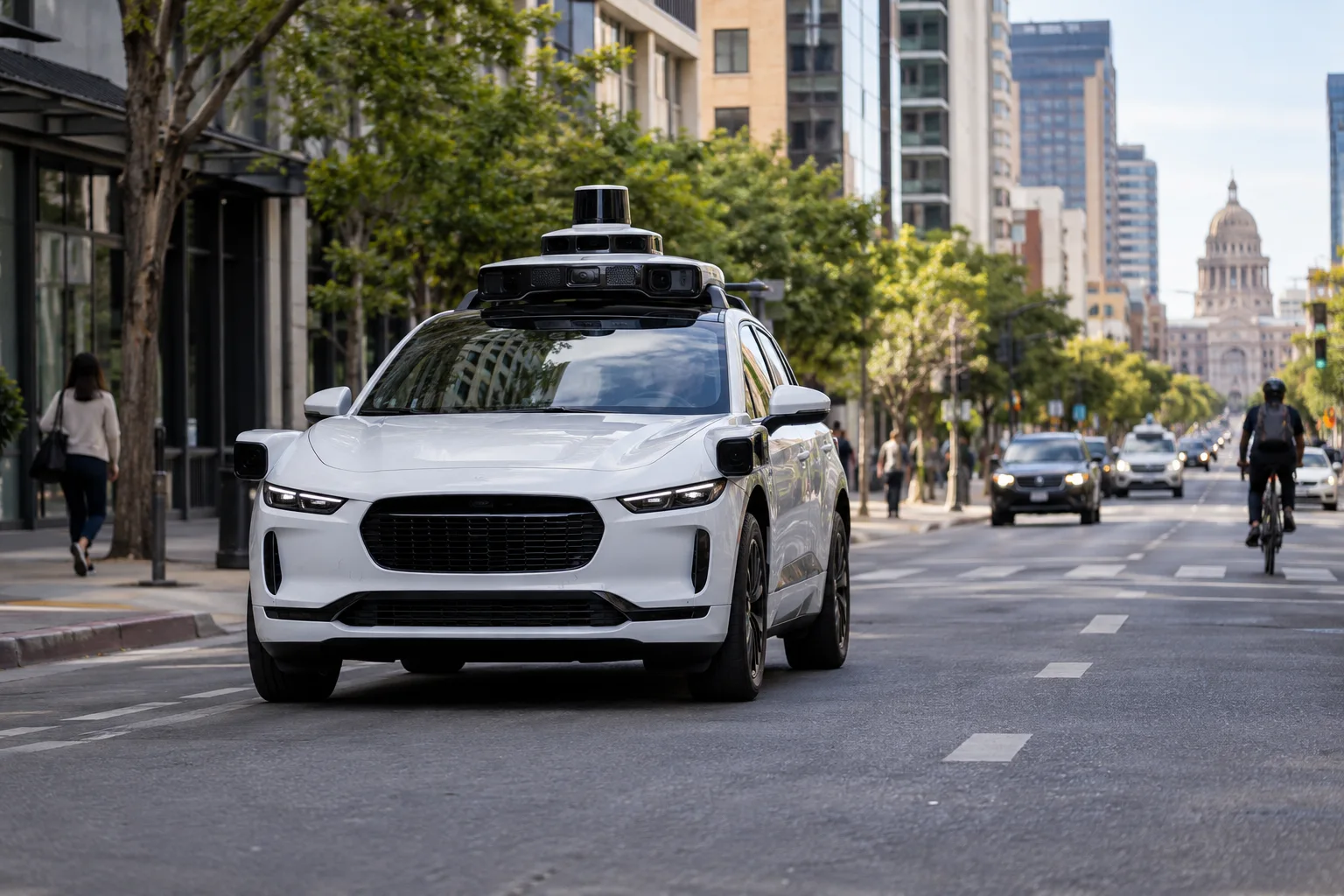
Autonomous road vehicles do some or all of the driving without a human in control. Driverless robotaxis now operate in several US cities, and independent and company data both report fewer crashes per mile than human drivers, but the evidence covers limited areas and mileage.
Computer-use AI agents
Computer-use AI agents are models that look at screenshots and control a mouse, keyboard or browser to carry out tasks in software built for people. In the 2024 OSWorld benchmark the best model tested completed 12.24% of tasks, against a human baseline of 72.36%, and prompt injection from web content remains far from a solved problem.
Delivery drones
Delivery drones are small uncrewed aircraft that carry parcels and urgent supplies from a hub to a customer. Companies report large delivery counts and approvals to fly beyond the operator's line of sight, but most figures come from the operators themselves. Services have been paused after crashes and software faults, and two Colorado towns have frozen new hub applications.
Event-based (neuromorphic) cameras
Event-based cameras have pixels that report only when the brightness at that pixel changes, instead of recording full frames at a fixed rate. This gives very fast response, a wide range of brightness that a camera can handle, and low data output, and it needs new software to use well.
Humanoid robots
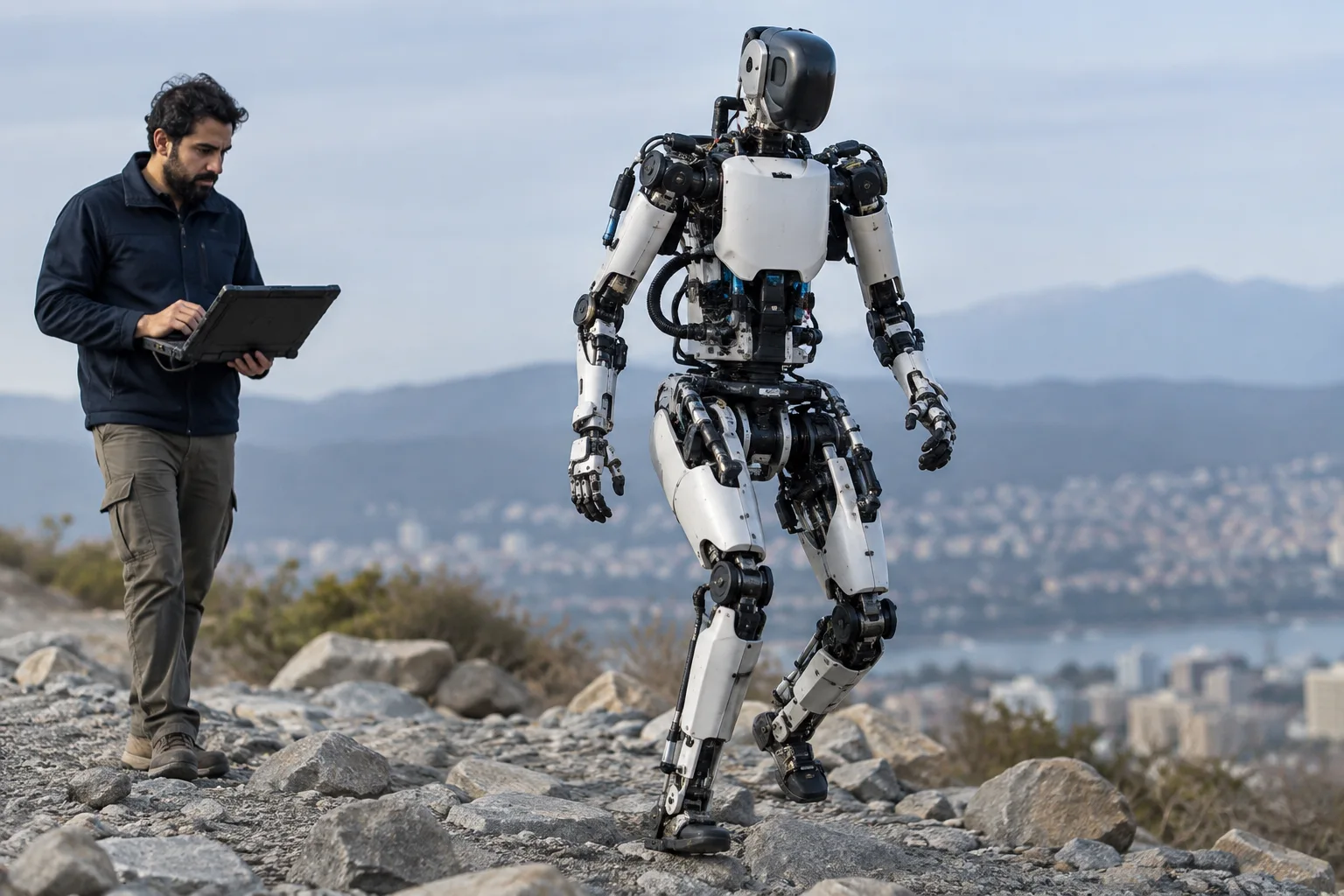
Humanoid robots are machines built roughly in the shape of a person, with two legs and two arms. Learned walking controllers have been shown outdoors, and companies plan factory use, but the sources reviewed here do not show useful work at scale.
Neuromorphic computing chips
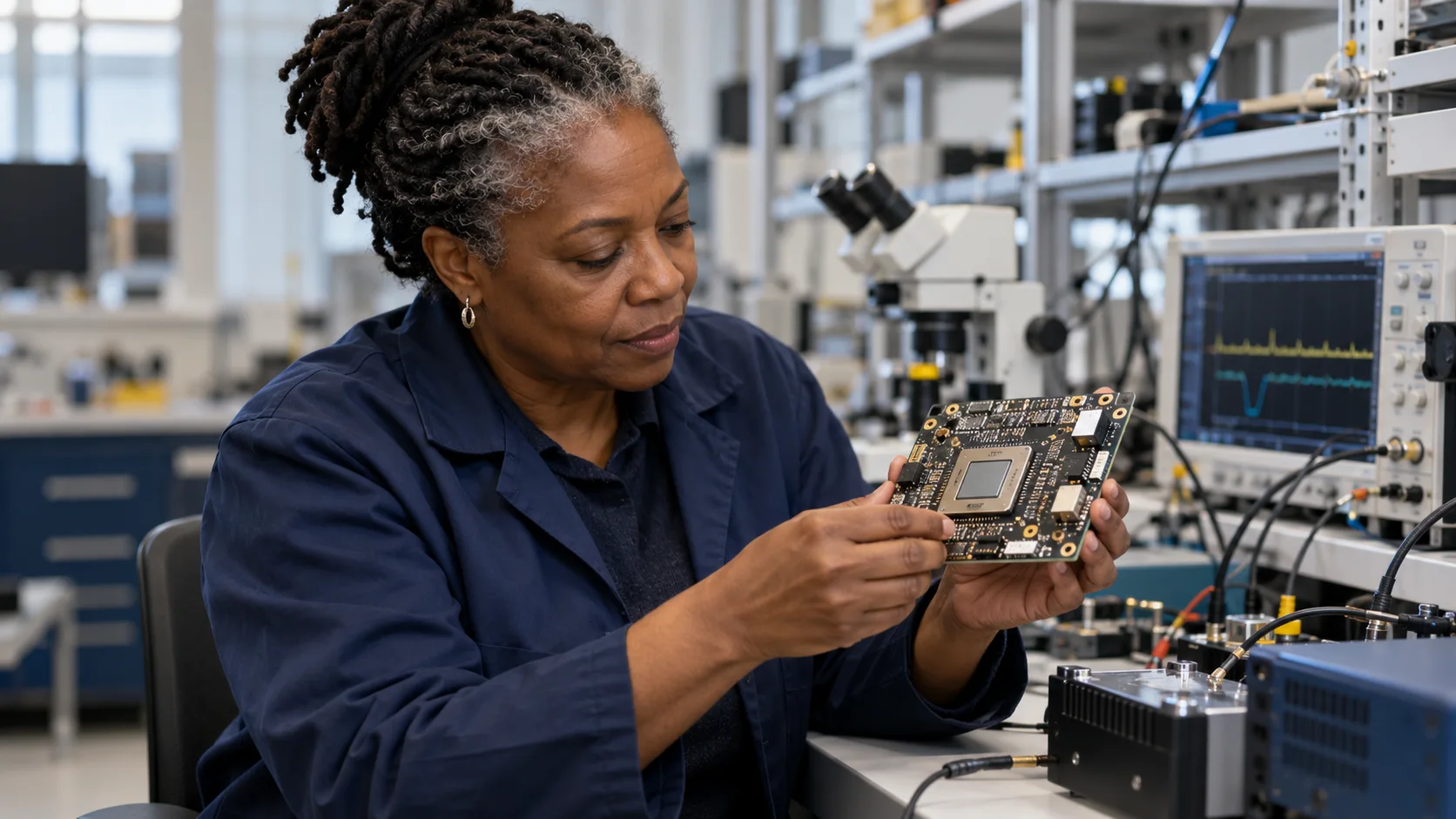
Neuromorphic chips are processors designed around ideas from the brain, such as many simple neurons that communicate with short spikes and memory placed right next to computation. Research chips and large research systems exist and report large energy savings on some tasks under specific test conditions, but they are not yet a mainstream alternative to GPUs.
Optical interconnects and co-packaged optics
Optical interconnects carry data between chips, switches and racks as light rather than electrical current. Co-packaged optics (CPO) places the optical engines inside the same package as the switch or processor, which shortens the electrical links and may reduce power per bit, but the approach is still in early industrial use.
Orbital data centres
Orbital data centres are proposed computers in orbit, powered by sunlight and cooled by radiators that face deep space. A few small flight demonstrations have been reported, but no independently verified commercial orbital data centre has yet shown sustained service or a competitive cost.
Photonic computing for AI
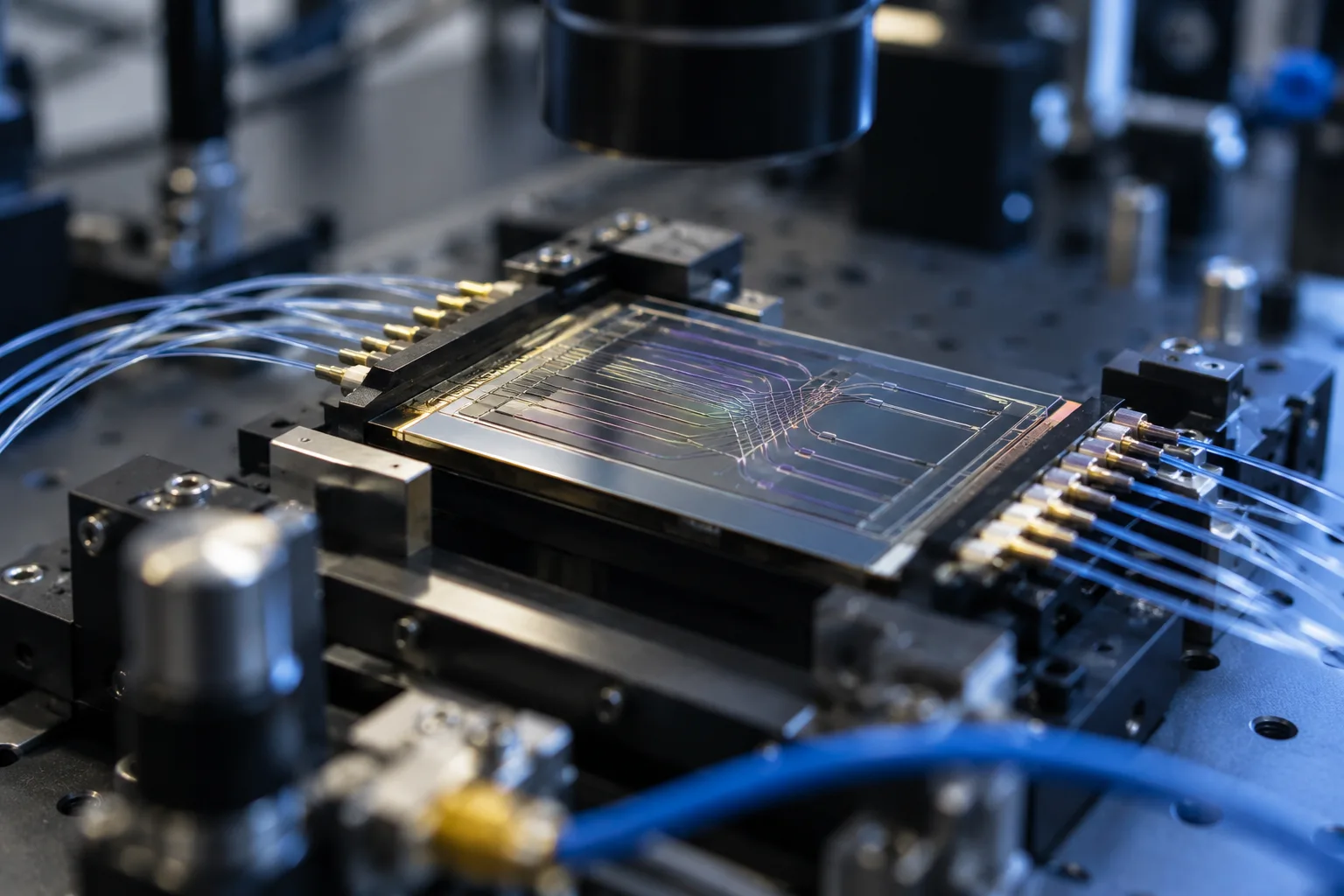
Photonic computing uses light, rather than electrical signals, to carry out some of the matrix calculations used in AI. Laboratory chips have run small neural networks and a packaged optical accelerator, but the sources reviewed here do not show that photonic chips outperform electronic hardware on real AI workloads.
Swarm robotics
Swarm robotics coordinates many simple robots through local sensing and communication rather than a central controller. Laboratory swarms have reached 1,024 robots, while the largest drone shows, military drone programmes and warehouse fleets mostly rely on central control.
Warehouse picking robots
Warehouse picking robots grab individual products from bins or shelves so that orders can be packed item by item. Amazon, Ocado and AI companies are deploying them, but the public performance figures so far come mostly from company announcements and controlled lab tests.
How far away are we?
AI agents doing everyday computer work
Pilots · 2 of 8 steps done
AI that makes its own scientific discoveries
Science demonstrated · 4 of 6 steps done
AI weather forecasts replacing physics-based models
Pilots · 4 of 7 steps done
AI-designed medicines reaching patients
Pilots · 5 of 8 steps done
An AI tutor for every student
Pilots · 2 of 6 steps done
Cameras that see like eyes
Pilots · 7 of 10 steps done
Computer chips designed mostly by AI
Pilots · 2 of 6 steps done
Computer chips that work like brains
Pilots · 4 of 8 steps done
Computers that calculate with light in data centres
Engineering prototypes · 5 of 8 steps done
Drone deliveries as an everyday service
Pilots · 1 of 6 steps done
Humanoid robots in the home
Engineering prototypes · 4 of 9 steps done
Most software written by AI
Scaling up · 1 of 6 steps done
Robot swarms doing real work
Engineering prototypes · 5 of 8 steps done
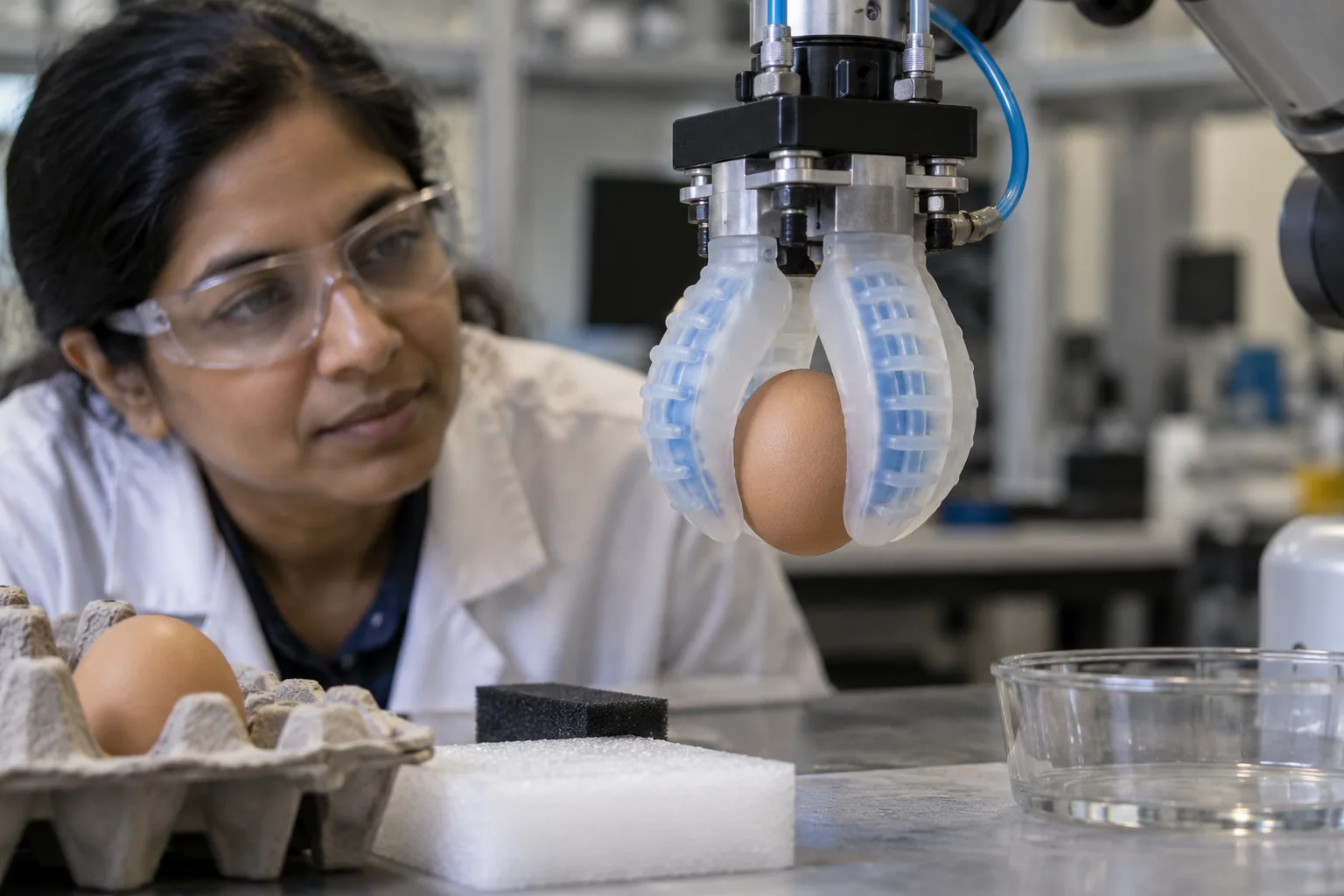
Robots that can pick any item in a warehouse
Pilots · 3 of 8 steps done
Self-driving cars on every road
Pilots · 2 of 7 steps done
Breakthroughs
CRESt platform screens more than 900 catalyst chemistries in three months
The Copilot for Real-world Experimental Scientists (CRESt) platform combined multimodal models, knowledge-assisted Bayesian optimisation and robotic experimentation. Applied to electrochemical formate oxidation, the study reports that it explored more than 900 catalyst chemistries and ran 3,500 electrochemical tests over three months, identifying a catalyst in an eight-element Pd–Pt–Cu–Au–Ir–Ce–Nb–Cr composition space with a reported 9.3-fold improvement in cost-specific performance.
Diffractive photonic processor reports 1,024-size matrix multiplication with 10^-6 mean error
The authors report a reconfigurable diffractive tensor processor, the diffractive tensorized unit, that performs arbitrary matrix multiplication at size 1,024 with a mean absolute error of 10^-6. They also report competitive accuracy on natural-language-generation and cross-modal-recognition tasks, and a 1,000-fold improvement in computing throughput over conventional electronic processors in their own comparison.
Automated platform optimises nanoparticle synthesis across hundreds of experiments
The platform combined GPT-based literature retrieval, automated synthesis and characterisation, and an A*-based optimisation loop. Researchers applied it to Au, Ag, Cu2O and PdCu nanoparticles. For multi-target gold nanorod synthesis, the study ran 735 experiments to optimise longitudinal plasmon peaks across 600–900 nm; it also reports 50 experiments for gold nanospheres and silver nanocubes. Under repeated identical gold-nanorod parameters, peak and full-width-at-half-maximum deviations were no greater than 1.1 nm and 2.9 nm, respectively.
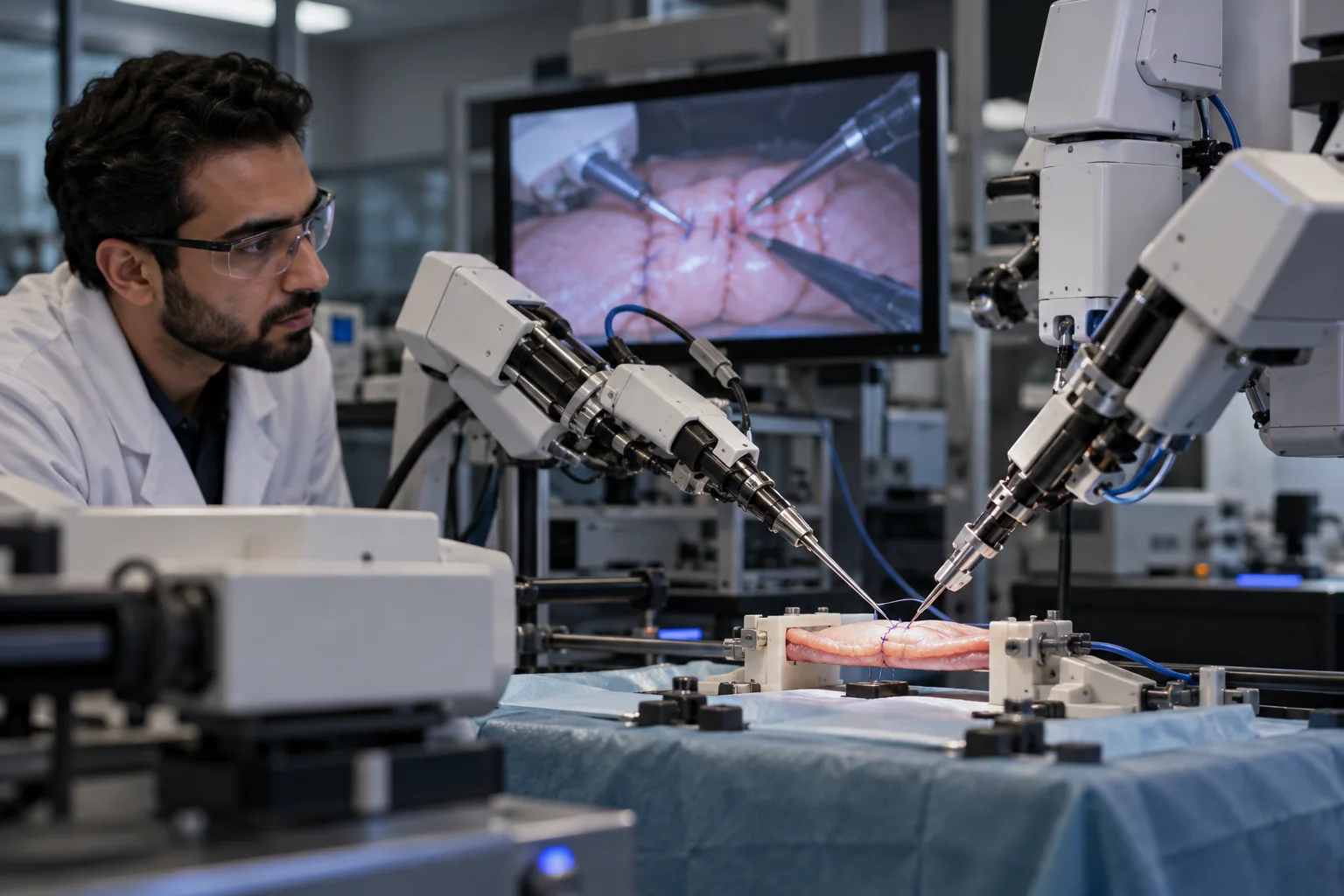
Robot performs gallbladder removal steps autonomously on eight ex vivo specimens
A hierarchical control framework (SRT-H) combined a high-level planner that issues task and corrective instructions in natural language with a low-level policy that generates robot trajectories, trained by imitation learning. In ex vivo cholecystectomy experiments it completed the targeted procedure steps with a 100% success rate across eight gallbladders, without human intervention.
An integrated photonic accelerator with more than 16,000 components reduces computation time for Ising-problem solvers
Hua and colleagues report a large-scale integrated photonic accelerator with more than 16,000 photonic components, built to perform linear matrix multiply-accumulate operations at up to 1 GHz, with about 3 ns latency per cycle. The authors co-integrated electronic logic, memory and control chips with the photonics using 2.5D hybrid advanced packaging. They report that the low latency reduces computation time for heuristic solvers of hard Ising problems.
Photonic processor runs ResNet, BERT and an Atari reinforcement learning agent
Lightmatter researchers described a photonic AI processor that executed full models, including ResNet, BERT and the DeepMind Atari deep reinforcement learning algorithm, and reported near-electronic precision for many of these workloads.
DeepMind's AlphaProof and AlphaGeometry 2 score 28 of 42 at 2024 IMO
At the 2024 International Mathematical Olympiad, a combined system of AlphaProof and AlphaGeometry 2 scored 28 points out of 42, which the operator described as the top end of silver-medal level. The gold threshold was 29 points. AlphaProof solved three of the five non-geometry problems, including the hardest problem in the competition, which the post says only five human contestants solved. AlphaGeometry 2 solved the geometry problem. The two combinatorics problems remained unsolved. The problems were manually translated by people into the Lean formal language before the systems worked on them. The post says one problem was solved within minutes and others took up to three days. Human experts scored the solutions under IMO point rules.
AlphaFold 3 predicts joint structures of proteins, nucleic acids, ligands and ions
Google DeepMind and Isomorphic Labs described a diffusion-based model that predicts the joint 3D structure of complexes containing proteins, nucleic acids, small molecules, ions and modified residues. On the authors' benchmarks it was more accurate than state-of-the-art docking tools for protein-ligand interactions, than nucleic-acid-specific predictors for protein-nucleic acid interactions, and than AlphaFold-Multimer v2.3 for antibody-antigen prediction.
Hala Point neuromorphic system with 1.15 billion artificial neurons delivered to Sandia
No peer-reviewed result: this is a system deployment. Sandia National Laboratories reported receiving Hala Point, an Intel research system built from 1,152 Loihi 2 processors with 1.15 billion artificial neurons in a chassis about the size of a microwave oven. Sandia described it as 10 times faster and 15 times denser than its predecessor, the 50-million-neuron Pohoiki Springs.
AlphaGeometry solves 25 of 30 olympiad geometry problems without human demonstrations
AlphaGeometry pairs a language model, trained from scratch on millions of synthetically generated theorems and proofs, with a symbolic deduction engine. On a test set of 30 recent olympiad-level Euclidean geometry problems it solved 25, compared with 10 for the previous best method. Its proofs are human-readable and were evaluated by human experts.
Four SAMPLE agents find more thermostable glycoside hydrolases while sampling under 2% of a sequence landscape
Four independent SAMPLE agents ran automated design-test-learn cycles to search a 1,352-sequence combinatorial landscape for thermostable GH1 glycoside hydrolases. Using the platform assay, each agent found sequences at least 12 °C more stable than the starting sequences while sampling less than 2% of the landscape. Researchers then expressed the top design from each agent in Escherichia coli and confirmed improved thermostability with lysate-based assays, although manual measurements were lower than the automated results.